

Last updated October 30, 2026
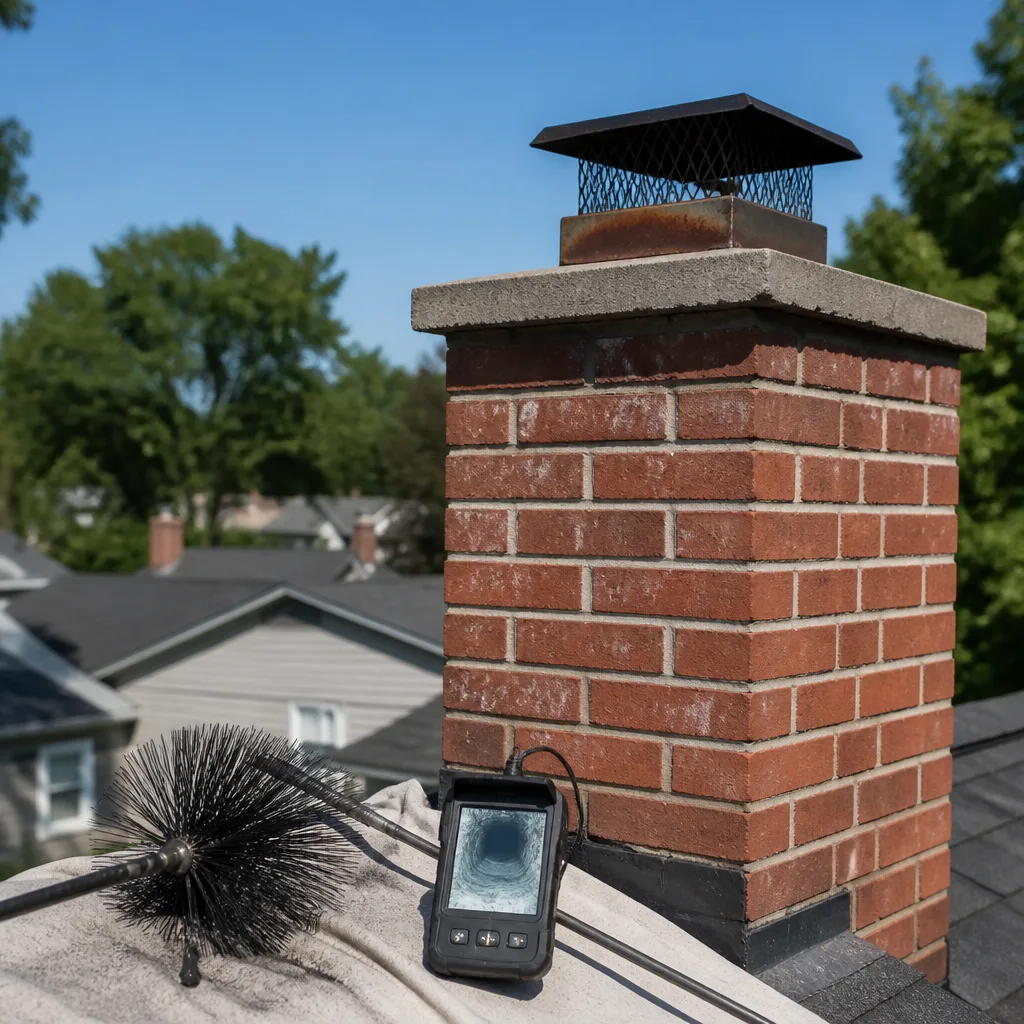 Sweep & inspection
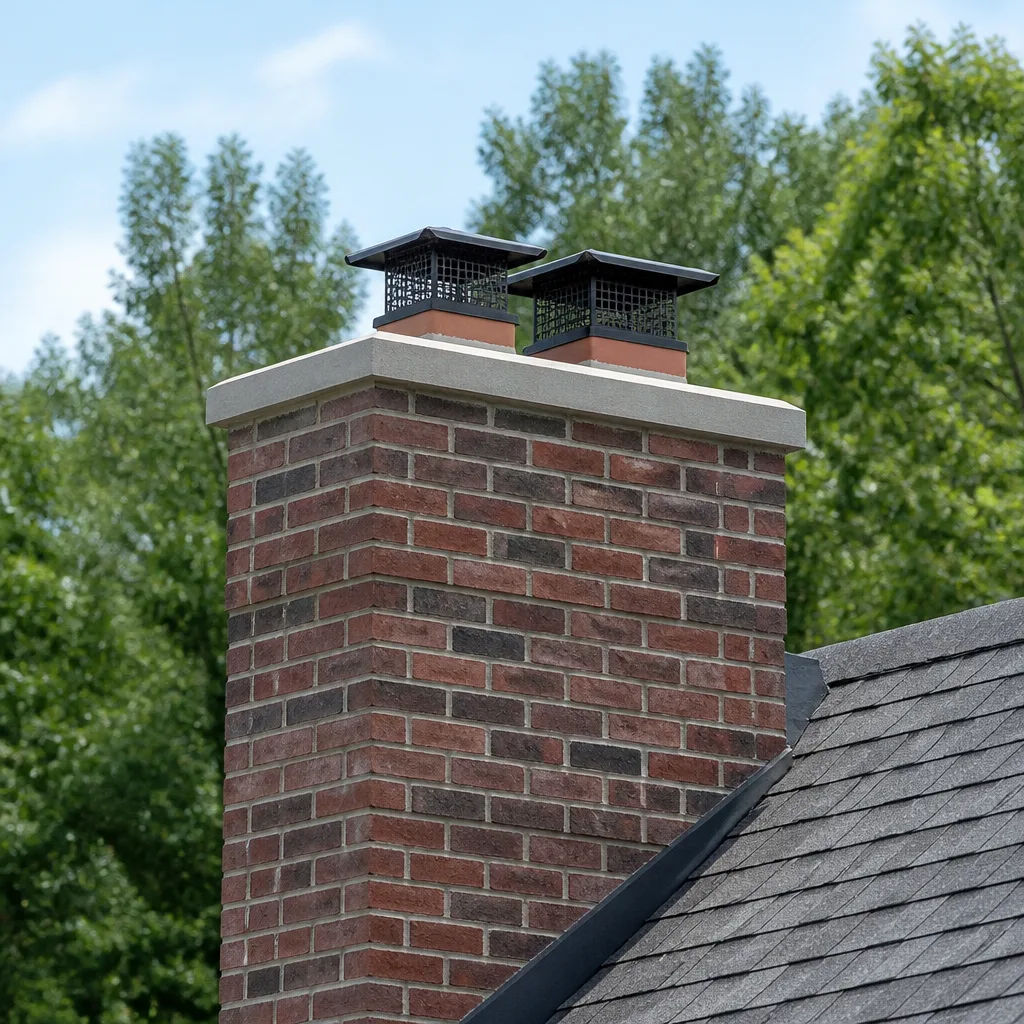 Caps & crowns
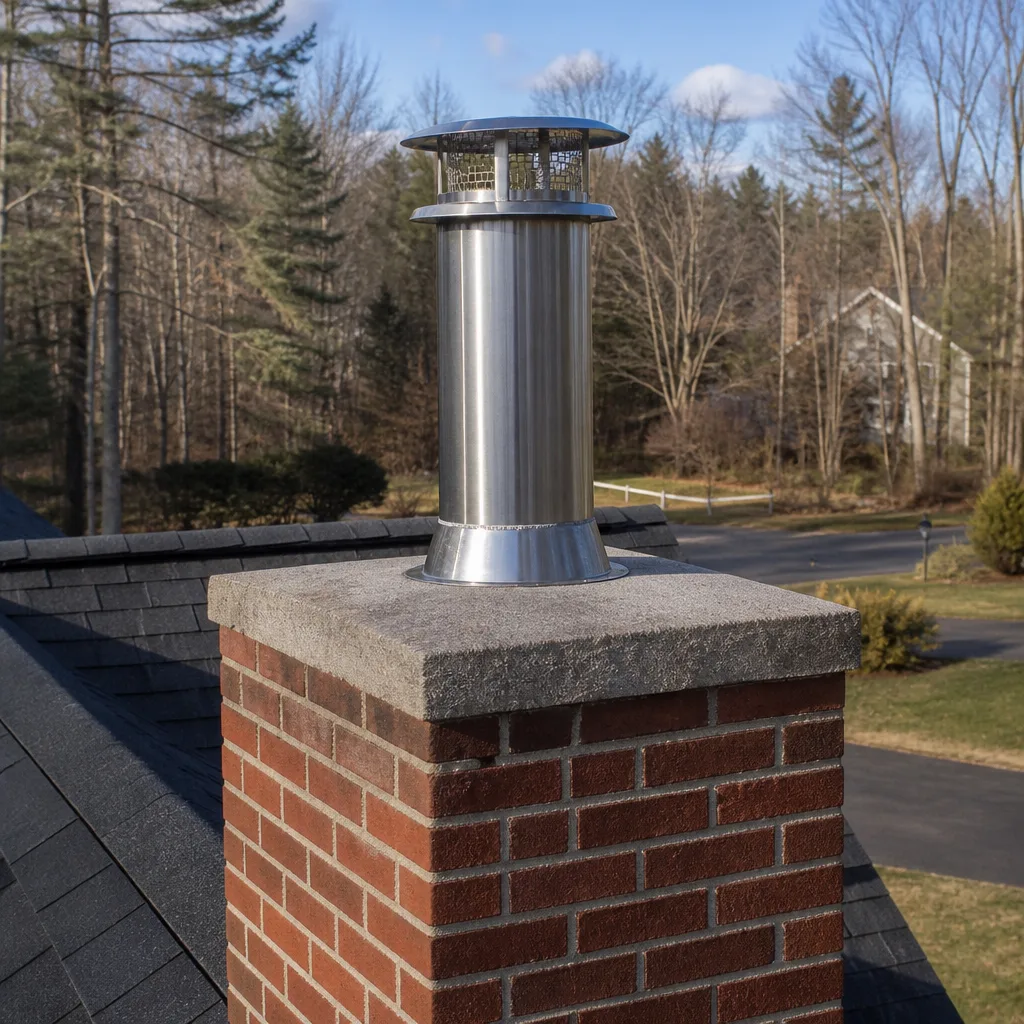 Flue relining
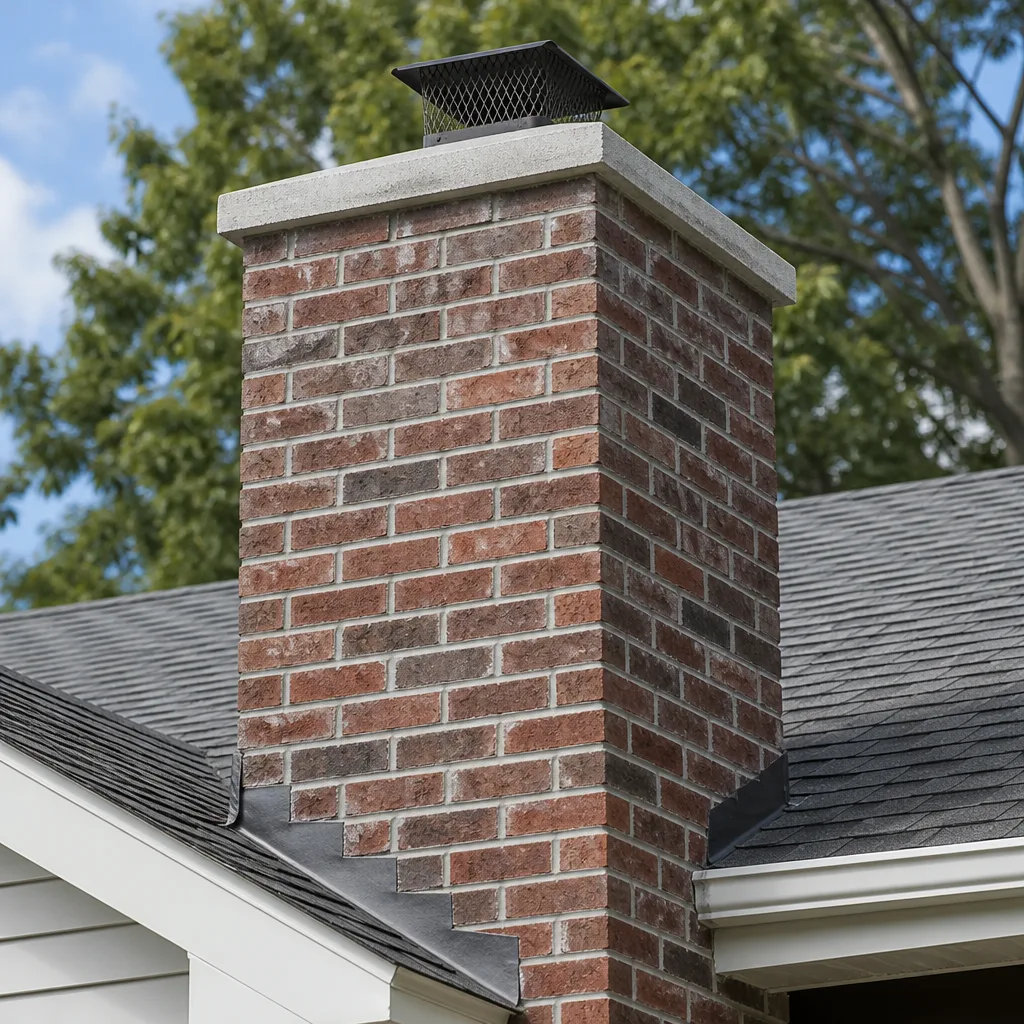 Masonry repair
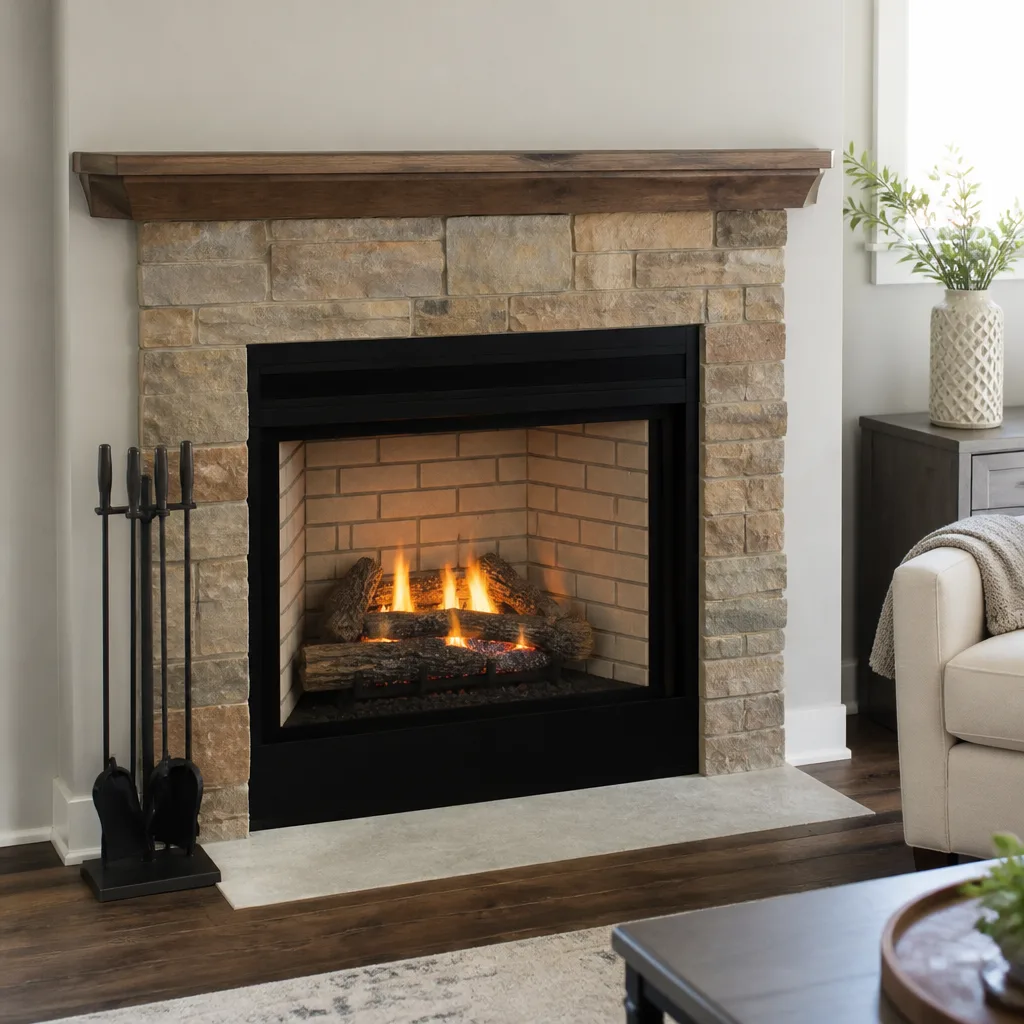 Gas fireplace service
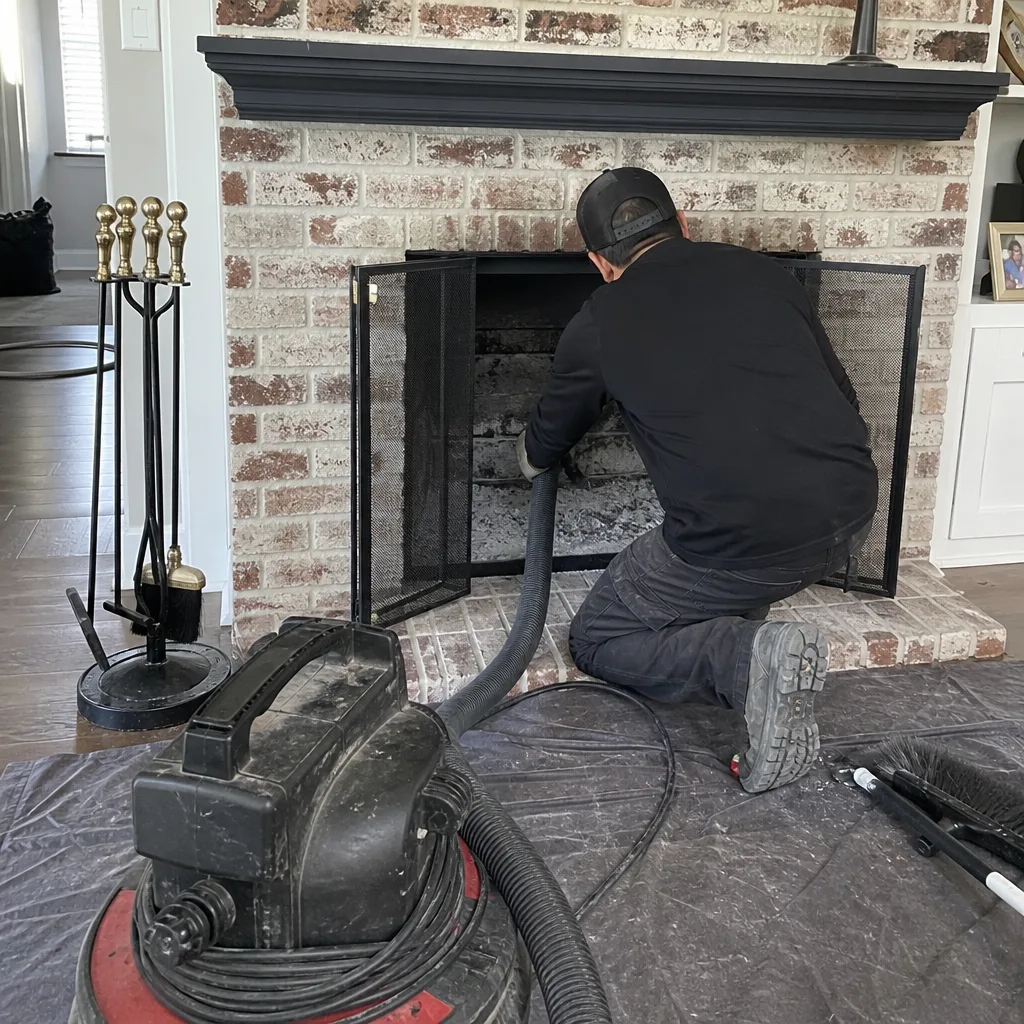
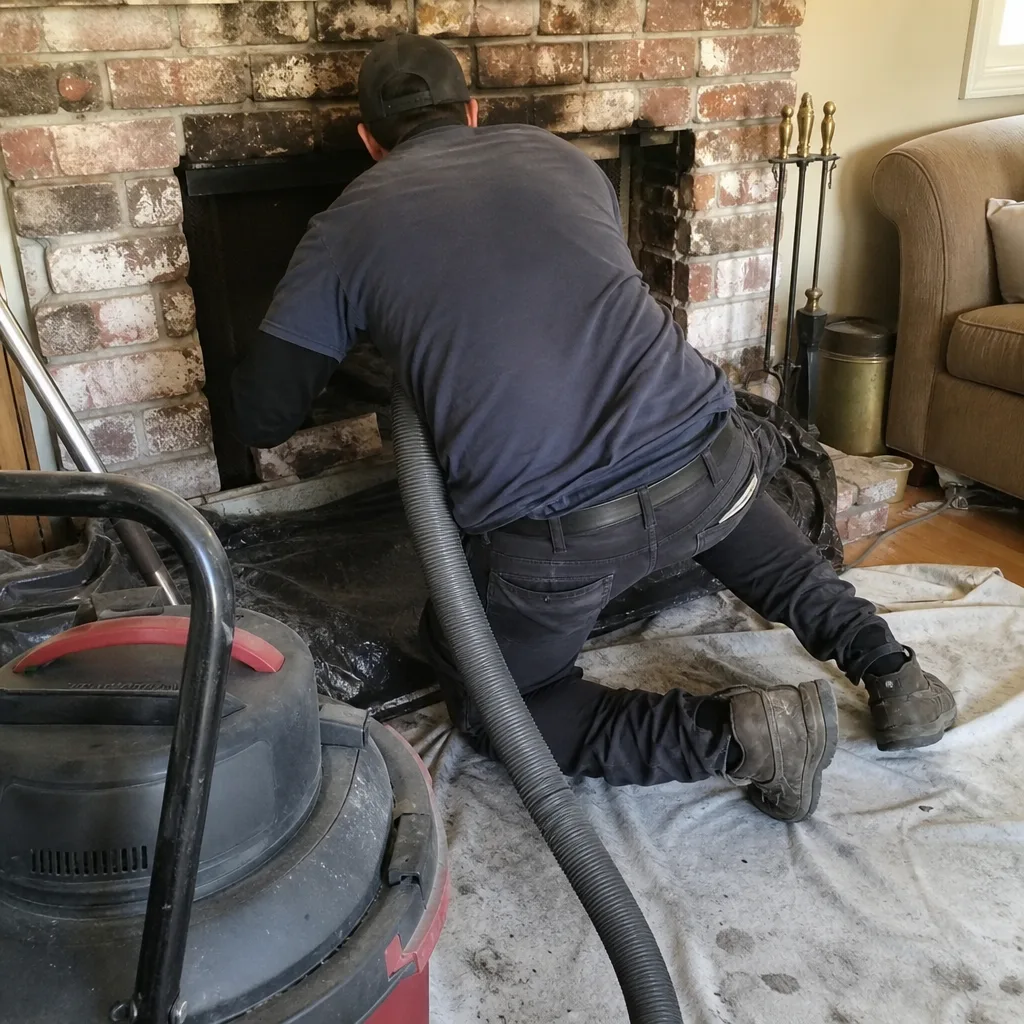
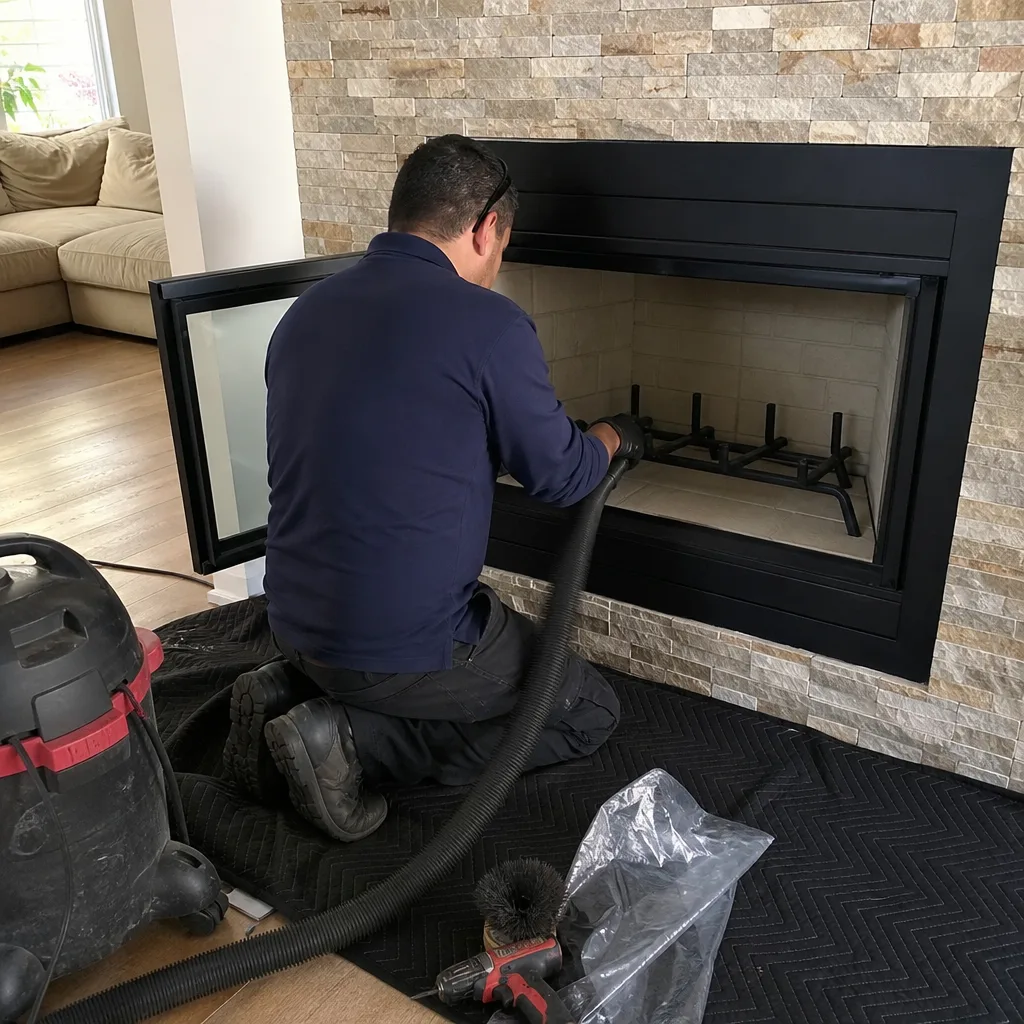
Level 1 sweep and inspection to the NFPA 211 annual standard - flue, crown, cap, and flashing checked and photographed
Chimney sweep logs do not sweep chimneys. They loosen some creosote - which then falls where a brush and vacuum still have to collect it.
Chimney Sweep Maintenance Checklist for Orange Homeowners
If your Orange home was built between 1970 and 1995, there’s a better than 50% chance you have a prefabricated metal firebox and the maintenance schedule it needs is completely different from the brick-and-mortar checklist most guides publish. Most online chimney checklists assume a traditional masonry fireplace, but Orange’s housing stock skews heavily toward tract developments from the Nixon, Carter, and Reagan eras, when zero-clearance factory-built units were the builder’s default choice. This guide gives you two separate checklists, one for prefabricated systems and one for masonry, plus the specific wear points each type develops first in our local climate. You’ll learn what to check yourself, what requires a technician’s tools, and how to time your Chimney Sweep services around how often you actually burn.
Quick Answer
A chimney maintenance checklist for Orange homeowners should start with identifying whether you have a prefabricated or masonry system, then follow a usage-based schedule: annual sweep for fireplaces burned more than 25 times per year, biennial for lighter use. The critical self-check items are the damper plate, firebox interior, and visible flue surfaces, while camera inspection and clearance verification require a trained technician. For more guides & resources, explore our blog. Dryer vent inspection belongs on the same checklist because lint buildup is the leading appliance fire cause in single-family homes.
Styles & brands we work with
Table of Contents
- Identify Your System: Prefabricated vs. Masonry
- The Prefabricated Chimney Checklist
- The Masonry Chimney Checklist
- Self-Verification Items: What You Can Check Without Tools
- Technician-Only Items: What Requires Professional Equipment
- Usage-Based Cadence: How Often Should You Actually Sweep?
- The Dryer Vent Parallel Checklist
- Documentation Checklist: Protecting Your Warranty
Identify Your System: Prefabricated vs. Masonry
Before any maintenance task makes sense, you need to know what you’re working with. In Orange, the split between prefabricated and masonry systems falls heavily along construction-date lines. Homes built before roughly 1965 in neighborhoods like Old Towne and the areas around Chapman Avenue typically have true masonry chimneys: brick or block exteriors, clay tile liners, and a concrete crown at the top. Homes built after 1970 in tract developments like the ones east of the 55 freeway and north of Katella almost always have prefabricated zero-clearance fireplaces sold by brands like Majestic, Heatilator, and Superior.
Here’s the fastest identification method: open the firebox and look for a metal smoke chamber or a round metal flue pipe instead of brick or clay tile. If the interior surfaces are metal and the exterior of the chimney is a framed chase with stucco or siding, you have a prefab unit. Masonry systems show brick or stone on the interior firebox walls and a clay tile or metal liner visible from the top. Another tell: prefab fireplaces have a manufacturer’s rating plate riveted inside the firebox opening, usually on the left or right side. That plate lists the model number, clearance requirements, and the specific flue type the unit is tested with.
Why this matters for maintenance: prefab units have a finite service life, typically 20 to 30 years for the firebox refractory panels and sometimes less for the inner chimney components. Masonry systems last much longer but degrade through moisture intrusion and freeze-thaw cycles at the crown and mortar joints. The failure modes are different, so the checklists are different. A prefab system that has a cracked refractory panel is a fire hazard because the firebox is no longer containing flame heat within the rated clearance distances. A masonry system with a cracked crown is a water-damage problem first and a fire-safety problem second.
In our experience in Orange, most homeowners never read their manufacturer’s rating plate, and many are surprised to learn that prefab fireplaces cannot simply be “rebuilt” the way a masonry firebox can. When a prefab firebox fails, the options are replacement of the entire unit or lining the existing flue if the firebox itself is still sound. This is where the distinction between cleaning and repair becomes critical, and why a sweep performed by a technician who also does chimney repair in Orange catches problems that a cleaning-only visit misses.
The Prefabricated Chimney Checklist
Prefabricated zero-clearance systems are not maintenance-free, despite what builder literature from the 1980s sometimes implied. The components that degrade first in Orange’s dry, occasionally marine-influenced climate are the refractory brick panels lining the firebox, the damper assembly, and the chimney termination cap at the top of the flue. Here is the inspection sequence we follow on every prefab system, in the order problems typically present themselves.
- Refractory panel inspection. Look for hairline cracks along panel seams, spalling (surface crumbling), or panels that have shifted out of alignment. A cracked panel exposes the metal firebox shell to direct flame heat, which can warp the shell and void the unit’s UL listing. Hairline cracks under 1/16 inch are often cosmetic; anything wider means panel replacement.
- Damper plate operation. Open and close the damper fully. Listen for grinding or feel for binding. Prefab dampers are typically a simple pivot plate at the top of the firebox throat, and when they fail, they either jam open or seize shut. A damper that won’t close is pulling conditioned air out of your Orange home year-round.
- Firebox floor and sidewall clearance. Check that no combustibles have been placed within the manufacturer’s specified clearance, usually 36 inches from the opening for furniture and 12 to 16 inches for mantel protrusions. This is a code requirement in Orange, not a suggestion.
- Chimney cap and spark arrestor. The termination cap on a prefab flue is a known corrosion point. In Orange, the combination of marine air, sun, and occasional Santa Ana-driven debris means caps rust at the weld points and spark arrestor mesh tears. A damaged cap lets rain in and birds in.
- Chase top and flashing. If your prefab chimney is enclosed in a wood-framed chase, the galvanized chase top is the roof. Chase tops rust through in 15 to 25 years, and once water penetrates the chase, it runs down alongside the flue pipe and rots the framing from the inside while never showing a ceiling stain in the living space.
- Flue interior via camera. This is a technician-only item, but it belongs on the checklist because Orange homeowners with prefab systems should expect a camera pass at every service visit. The inner stainless flue liner in a prefab unit can develop a creosote glaze in as few as 20 burns if the wood is not fully seasoned.
Prefab-Specific Warning Signs
- White staining or efflorescence on the chase exterior (water is getting into the framing)
- A chemical or metallic smell during the first fire of the season (paint or manufacturing residue burning off, or worse, a failing firebox)
- The firebox refractory panels sagging forward from the back wall (the metal anchor tabs have failed)
- Rust flakes falling into the firebox from above (the inner flue or damper is corroding)
- Visible gaps between the firebox opening and the surrounding framing (settling or heat warping)
One more Orange-specific note on prefab units: many were installed as original equipment in tract homes built in the 1970s through early 1990s, which means most are now at or past their designed service life. If your home near Orange’s older subdivisions still has its original prefab fireplace, we recommend a full camera inspection before the first burn of the season, not just a sweep. A 30-year-old firebox that looks fine from the outside can have refractory panels that are one hot fire away from failing, and the cost difference between a panel replacement and a firebox replacement is significant. We spec professional-grade components like Copperfield caps and DuraFlex liners on these systems because the off-the-shelf parts at hardware stores often don’t match the original manufacturer’s flue dimensions, and a mismatched cap on a prefab flue creates a draft problem as much as a water problem.
The Masonry Chimney Checklist
Masonry chimneys in Orange are concentrated in the pre-1965 housing stock, and their maintenance profile is driven by moisture more than heat. A traditional brick chimney with a clay tile liner fails from the top down: the concrete crown cracks from thermal expansion, water enters the brick, and the freeze-thaw cycle, rare but real in Orange’s winter nights, spalls the brick faces. Fewer freeze cycles than the Midwest, but the sun is relentless, and UV exposure breaks down crown sealant faster here than in almost any other climate in the country. Here is the masonry-specific sequence.
- Crown inspection. Look for cracks wider than 1/8 inch, missing sealant, or a crown surface that has turned from concrete-smooth to pebbly and porous. The crown is the single most important waterproofing element on a masonry chimney, and in Orange’s sun, crowns need resealing every 5 to 8 years.
- Brick face and mortar joints. Check for spalled brick faces (the outer surface of the brick popping off), soft mortar that scrapes out with a screwdriver, and vertical cracking that follows a step pattern through the joints. Any of these means water is inside the chimney structure.
- Flue tile condition via camera. Clay tile liners crack under the thermal stress of repeated heating and cooling, and in Orange, the temperature swing between a hot fire and a 45-degree winter night is enough to propagate hairline cracks into full-thickness fractures. A cracked flue tile is a fire hazard because the tile is the only fire barrier between the flue gases and the surrounding wood framing.
- Damper assembly. Masonry dampers are typically cast iron throat dampers mounted above the firebox. They rust at the hinge pins, and once the damper plate fails, it either falls into the firebox or seizes in place. A missing or failed damper plate is a repair item, not a cleaning item.
- Smoke chamber parging. The smoke chamber is the inverted funnel between the firebox and the flue, and in older Orange masonry chimneys, the parge coating over the chamber walls is often original and crumbling. Exposed corbelled brick in the smoke chamber collects creosote in ways a brush sweep cannot fully clean.
- Flashing and counterflashing. Where the chimney meets the roofline, the step flashing and counterflashing seal the penetration. Orange’s intense sun breaks down the sealant at the top of the counterflashing, and the single most common leak source on masonry chimneys in older Orange homes is failed flashing, not failed brick.
Masonry-Specific Warning Signs
- Water stains on the ceiling around the chimney chase (failed flashing or crown)
- Crumbling mortar on the ground near the chimney base (active brick spalling)
- Draft problems that worsen in windy weather (a cracked flue tile or an oversized flue for the firebox opening)
- White chalky deposits on the brick surface (efflorescence, meaning water is moving through the masonry)
- Smoke entering the room when the damper is fully open (smoke chamber blockage or flue restrictions)
The repair path for masonry systems differs from prefab. A masonry firebox with cracked firebrick can be rebuilt, and a clay tile flue with cracked tiles can be lined with a stainless system like DuraFlex or, in many cases, restored with a HeatShield resurfacing application rather than a full liner replacement. This is a meaningful distinction for Orange homeowners because full masonry chimney rebuilds are expensive, and the difference between a chimney that needs a $4,000 liner and one that needs a $2,000 HeatShield restoration is only visible on camera. A sweep-and-repair company in Orange can often make that call on the same visit the problem is discovered, which is the difference between a one-week repair and a one-month reconstruction.
Self-Verification Items: What You Can Check Without Tools
Some parts of a chimney inspection require camera equipment and brushes, but a surprising number of critical checks are visual and can be done by any careful homeowner. The key is knowing what a failing component actually looks like, not what a sales brochure says it looks like. Here are the self-verification items we recommend Orange homeowners perform before a professional service, not in place of it.
Damper Plate Condition
Open the damper and look at the plate itself. On a prefab unit, the damper is usually a flat metal plate with a pivot mechanism mounted at the top of the firebox throat. On a masonry unit, it’s a cast iron throat damper above the firebox opening. What you’re looking for: rust that has eaten through the plate, warping from heat exposure, or a plate that no longer seats flush when closed. A damper that doesn’t seal wastes conditioned air every hour of every day, summer included. In Orange’s cooling season, a failed damper is an open hole into your attic, not just a winter draft problem.
Firebox Interior Cracks
For prefab units, examine the refractory panels inside the firebox. You’re looking for cracks that are wide enough to catch a fingernail, panels that have pulled away from the back wall, or missing chunks along panel edges. For masonry fireboxes, look for firebrick cracks wider than 1/8 inch, loose firebrick, or mortar joints that have turned to sand. Either scenario means the firebox liner is no longer doing its job of containing combustion heat. You can check this yourself in sixty seconds with a flashlight.
Exterior Chase and Masonry Surface
Walk around the outside of your chimney. For a framed chase, look for rust bleeding through the stucco or siding at the chase top, gaps in caulking at the roof line, and any wood siding that looks darker or softer than surrounding areas. For masonry, look for the signs listed above: spalled brick faces, crumbling mortar, white efflorescence, and a crown that looks porous rather than smooth. In Orange, the west-facing and south-facing sides of the chimney degrade noticeably faster from sun exposure, so pay particular attention to those faces.
Combustible Clearances
This is the most frequently missed self-check item in Orange homes. Factory-built fireplaces have a manufacturer-specified clearance distance from the firebox opening to any combustible material: usually 36 inches to the front, 12 to 16 inches to the sides and mantel. These clearances are listed on the rating plate inside the firebox, and they are code-enforceable. We regularly see Orange homeowners with furniture, firewood racks, and Christmas decorations placed well inside the required clearance. Remember that the clearance applies to anything that can burn, not just permanent fixtures.
What you cannot self-verify: the interior of the flue, the condition of the chimney cap from above, the smoke chamber, and any internal clearances between the flue and surrounding framing. Those items require tools, a ladder, a camera, or all three, and they are the reason a professional sweep is part of the annual or biennial schedule even for homeowners who diligently perform self-checks.
Technician-Only Items: What Requires Professional Equipment
Some inspection points cannot be reached or evaluated without a camera system, trade knowledge of failure patterns, and in some cases, access equipment. Orange homeowners should expect these items on every professional service visit, and anyone offering a sweep without them is not providing a complete service.
- Full-flue camera inspection. A sweep with brushes removes creosote; a camera verifies the flue is sound. Without a camera pass, a cracked flue tile in a masonry system or a separated liner joint in a prefab system goes undetected until it causes a fire or a carbon monoxide leak. Camera inspection should be standard on every visit, not an add-on.
- Smoke chamber evaluation. On masonry chimneys, the smoke chamber sits above the firebox and below the flue, and its corbelled walls and irregular shape trap creosote that brush sweeps often miss. A technician checks the parge coating and can see accumulation patterns that indicate draft problems.
- Chimney cap and termination assessment. Inspecting the cap requires ladder access or roof work, and evaluating whether the cap is correctly sized for the flue requires knowing what the original manufacturer specified. An undersized cap restricts draft; an oversized cap lets rain in. This is not a visual check from the ground.
- Clearance-to-combustibles verification. Factory-built fireplaces must maintain specific clearance distances between the flue pipe and any wood framing inside the chase, and these clearances are impossible to verify without an access panel or camera placement. A technician knows the required distances for the specific model and can spot violations that a homeowner cannot.
- Draft measurement. Proper draft is measurable, not just felt. A smoke match helps, but a draft gauge gives you a number, and that number tells you whether a weak-burning fire is a chimney problem or a wood problem. Orange homes near the foothills can experience unusually strong or weak draft based on the interplay between the chimney height and the surrounding terrain, and this is not something a homeowner can self-diagnose.
- Warranty-required documentation. Factory-built fireplace manufacturers often require professional inspection records to maintain warranty coverage on firebox components. A technician provides the written report that keeps your documentation trail intact, and that report is the thing you’ll need if a warranty claim ever comes up.
The continuity between inspection and repair matters here. When a technician finds a cracked refractory panel or a failed damper during a sweep, the ability to fix it immediately means the chimney is safe to use that same season. If you’re working with a company that only does chimney sweep in Orange and refers repair work out, you’re left with a second scheduling cycle, a second service call, and a winter season that slips away. The same team that finds the problem fixing it in the same visit is a material advantage, not a convenience.
Usage-Based Cadence: How Often Should You Actually Sweep?
The National Fire Protection Association’s standard 211 says chimneys should be inspected annually and cleaned as needed, and the “as needed” part is where most Orange homeowners need more specific guidance. The actual sweep frequency depends on how much you burn, what you burn, and what kind of system you have. Here is a usage-based framework that works for Orange’s climate and construction stock.
Heavy Use: More Than 25 Fires Per Year
If you burn more than 25 fires per year, which in Orange’s mild climate means using your fireplace more than twice a month during the November-through-February burning season, you should have the chimney swept every year. This applies to both prefab and masonry systems. A full season of fires produces enough creosote to warrant brush removal regardless of what the firebox looks like from below.
Moderate Use: 10 to 25 Fires Per Year
This is the most common usage pattern in Orange, and it’s the range where annual sweeping can sometimes be deferred. Ten to 25 fires per year, roughly one or two fires per week during the coldest stretch, typically produces enough creosote to justify a sweep every season, but not always. The determining factor is wood quality: if you burn kiln-dried hardwoods, you may be fine on a biennial schedule. If you burn whatever’s sold at the gas station or grocery store, which in Orange is often pine or mixed softwood with high resin content, we’d stay annual.
Occasional Use: Fewer Than 10 Fires Per Year
A fireplace used fewer than 10 times per year, typically just for holidays and a handful of cold nights, can usually go two years between sweeps. The creosote accumulation rate at this usage level is low enough that the flue rarely approaches a hazardous thickness in a single season. However, the inspection should still be annual, because a chimney that sits unused for 10 months of the year develops different problems: wildlife intrusion, wasp nests, moisture accumulation, and rust. In Orange, a chimney that sits unused from March through October is an ideal place for nesting, and we find squirrel and bird debris in unused flues far more often than creosote.
The Variable That Changes Everything: Wood Quality
The single largest variable in Orange chimney creosote accumulation is what people burn. Unseasoned wood, which is common in Orange because firewood is often bought at gas stations or convenience stores that stock it wet, produces dramatically more creosote than properly dried hardwood. A household burning 15 fires per year on wet pine or mixed softwood produces the same creosote load as a household burning 30 fires on seasoned oak. If you’re buying firewood from a source that doesn’t specify moisture content and you can’t tell from the weight, assume the wood is wet and schedule sweeps more often, not less. For help selecting quality supplies, read our Choosing the Right Chimney Cleaning Brand: A Buyer’s Guide for Orange.
The Dryer Vent Parallel Checklist
Your chimney is not the only venting system in your Orange home that needs scheduled maintenance, and treating the clothes dryer vent as a parallel checklist item solves the most commonly overlooked fire hazard in single-family homes. The U.S. Fire Administration identifies dryer lint as the leading cause of appliance-related fires in residential properties. In Orange’s housing stock, dryer vents run through attics, walls, and crawl spaces, often with total runs of 15 feet or more, and every foot of that run is a place where lint accumulates. Here is the parallel checklist.
- Lint trap inspection. Pull the lint screen and check it before every load, not just when the dryer signals. A lint screen that’s coated in a waxy gray film means fabric softener residue is reducing airflow, and the screen needs washing with soap and water, not just lint removal.
- Exterior termination check. Walk outside to where the dryer vent exits the house. The termination should have a flap or louver that opens when the dryer is running and closes when it’s off. A flap that’s stuck open, missing, or blocked by a bird nest or debris means the system is compromised. Orange’s dry, dusty air means the exterior screen also collects a layer of fine dust that can restrict airflow even when the interior duct looks clean.
- Run-length awareness. Dryer ducts should be as short and straight as possible, and the maximum run length specified by most dryer manufacturers is 25 feet with each 90-degree elbow counting as 5 feet. Many Orange homes have dryer ducts that exceed this figure, especially in second-floor laundry rooms where the duct travels vertically or horizontally through interior walls before exiting the roof or an exterior wall. A run that’s too long or has too many elbows is a lint trap regardless of how often it’s cleaned.
- Lint accumulation behind the dryer. Pull the dryer away from the wall and check the connection between the dryer and the duct. Flexible foil or plastic transition hoses are no longer code-compliant in many jurisdictions, and they sag and collect lint in the ridges. A rigid or semi-rigid metal transition is the correct material, and we install metal transitions as standard on every dryer vent service.
- Annual professional dryer vent cleaning. The interior of the duct, like the interior of a chimney flue, cannot be effectively cleaned from either end with a household vacuum. A professional dryer vent cleaning in Orange uses a rotary brush system that scrapes the full circumference of the duct, and the difference in airflow before and after is measurable at the dryer’s exhaust.
Dryer vents fail slowly and quietly. The dryer takes longer to dry clothes, the exterior of the dryer gets hotter than it used to, and the laundry room smells faintly of burnt dust. None of these are dramatic until the day the duct finally ignites, and by then the lint has been accumulating for years. We include dryer vent service in our conversations with Orange homeowners because a chimney company that only looks at the fireplace is checking one system while ignoring another that’s statistically more likely to start a fire. This is where Prestige Chimney home service scope becomes relevant: the same team that sweeps your chimney can clean your dryer vent in the same appointment, and the cost of the combined visit is lower than two separate calls.
Documentation Checklist: Protecting Your Warranty
If your Orange home has a factory-built fireplace, the manufacturer’s warranty on the firebox and chimney components is tied to your maintenance records, and most homeowners have no idea this is the case. Warranty claims on prefab fireplaces are routinely denied because the homeowner cannot produce evidence of annual inspection and cleaning. Here is what you should record after every service visit, whether you perform some of the maintenance yourself or use a professional service.
What to Document
- Service date and a brief description of work performed. “Swept flue, replaced refractory panel, inspected cap” is sufficient. The date matters because warranty claims require evidence of continuous coverage since installation, not just a single recent service.
- Technician name and company. If a warranty claim is ever filed, the manufacturer may contact the servicing company to verify the work. A receipt with no name or company is weak evidence.
- Photos of the firebox interior before and after. This is the strongest documentation you can keep. A dated photo series showing the firebox panels, damper, and firebrick condition over time creates a visual record that no written description can match.
- Camera inspection findings. If a camera inspection was performed, keep the written report and any still images. These documents show the condition of the flue interior, which is the part of the system warranty claims most often reference.
- Replacement parts used. If a refractory panel, damper, cap, or liner component is replaced, record the part number and manufacturer. Warranty coverage often depends on the replacement parts being OEM or approved equivalents, and using off-brand components can void the remaining warranty.
- Wood type and approximate burn count since the last service. This is not typically required for warranty purposes, but it’s useful context if a claim is filed. “20 fires of seasoned oak since last service” tells the manufacturer you’re using the unit as designed, not overfiring with wet wood.
Why Documentation Matters in Orange Specifically
Orange has a high concentration of prefab fireplaces that are now 25 to 35 years old, which means many are approaching or past the typical warranty window. Some manufacturers offer extended coverage on firebox components if the unit was professionally serviced on schedule, and the documentation is what triggers that coverage. Even for units outside warranty, the documentation trail is evidence for a home sale. When an Orange home sells, the buyer’s home inspector will note the fireplace as a “not inspected” item in many cases, and a seller who can produce service records, camera reports, and a parts history has a meaningful advantage. The documentation is the difference between a fireplace that reassures a buyer and one that becomes a negotiation point.
When we install replacement components on prefab systems in Orange, we use professional-grade materials that match the original manufacturer’s specifications. For liner work, that means brands like DuraFlex, which is specified on more factory-built fireplace installations nationally than any other stainless liner. For cap replacements, Copperfield, which manufactures termination caps engineered for specific flue dimensions rather than generic fitments. For firebox restoration where a full replacement isn’t warranted, HeatShield, which resurfaces damaged flue interiors with a ceramic coating that carries its own warranty. The parts you can’t see are the parts that determine whether your chimney is safe, and that’s the entire argument for professional-grade materials over whatever’s cheapest at the hardware store.
Common Mistakes to Avoid
- Assuming a prefab fireplace is maintenance-free. Factory-built units require the same inspection diligence as masonry systems, and their service life is actually shorter. The most common failed component we see in Orange prefab systems is the refractory panel, and it fails whether or not you use the fireplace.
- Burning unseasoned wood. Wet wood is the leading cause of accelerated creosote buildup in Orange chimneys, and the firewood sold at convenience stores and gas stations is often not dried to the 20% moisture content that seasoned firewood requires. If your fires are smoky and smoldering rather than bright and hot, the wood is probably wet, and your sweep schedule should move from biennial to annual.
- Ignoring the dryer vent because it’s not a chimney. The dryer vent carries the same fire risk as a chimney and is statistically more likely to ignite. Most chimney companies don’t offer dryer vent service, so homeowners assume it’s outside the scope of chimney maintenance. It’s not, and a company that handles both under one roof closes that gap.
- Deferring a $300 sweep until there’s a “problem.” The most expensive chimney repairs in Orange homes come from deferred maintenance, not sudden failures. A cracked refractory panel caught during a $300 sweep is a $400 panel replacement. A cracked panel allowed to fail completely is a $4,000 firebox replacement.
- Using the wrong replacement parts. Prefab fireplace components are not generic. A cap that’s the wrong diameter or a damper that doesn’t match the manufacturer’s specification creates draft problems, not solutions, and the money spent on the wrong part is wasted before the correct part is ever purchased.
- Burning fires without checking for wildlife. Orange’s climate means chimneys sit unused for nine months of the year, and that’s exactly the window when squirrels, birds, and wasps move in. The first fire of the season after an unchecked flue can be a smoke event that fills your living room and tells you a nest is blocking the flue.
- Treating a gas insert like a wood fireplace. If you have a gas appliance in your fireplace, the maintenance schedule is different. Gas appliances produce water vapor during combustion, and that moisture combined with combustion byproducts creates a corrosive environment inside the flue. Gas flues need annual inspection for corrosion, not just periodic sweeping, and the failure mode is rust, not creosote.
See the difference
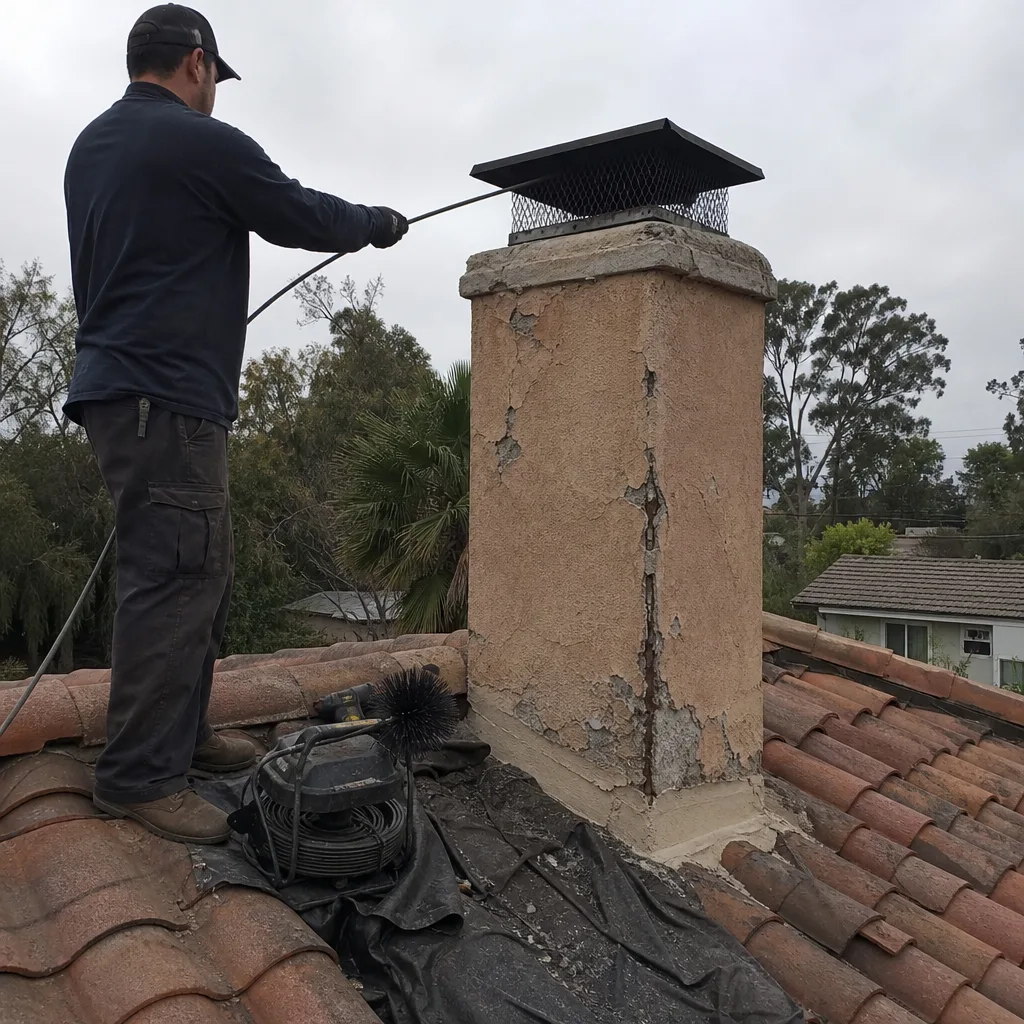 Before
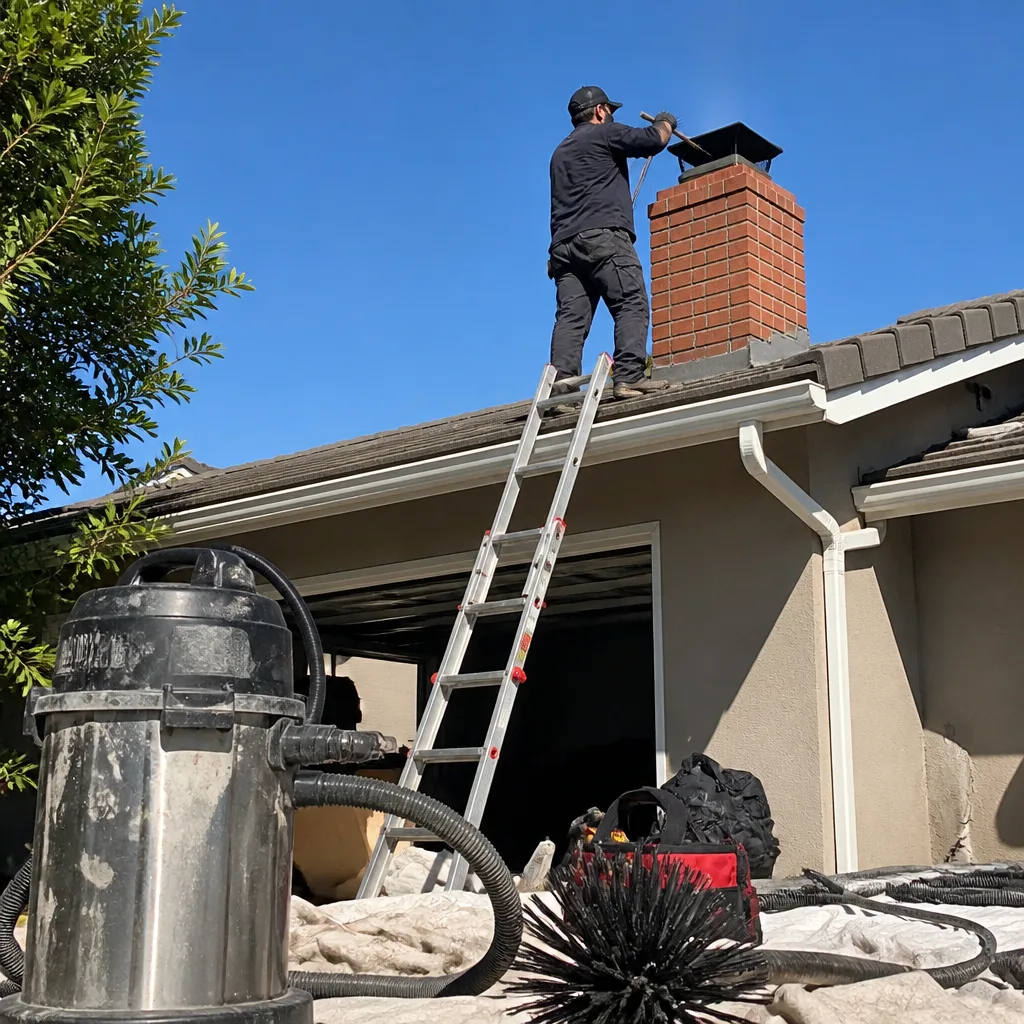 After
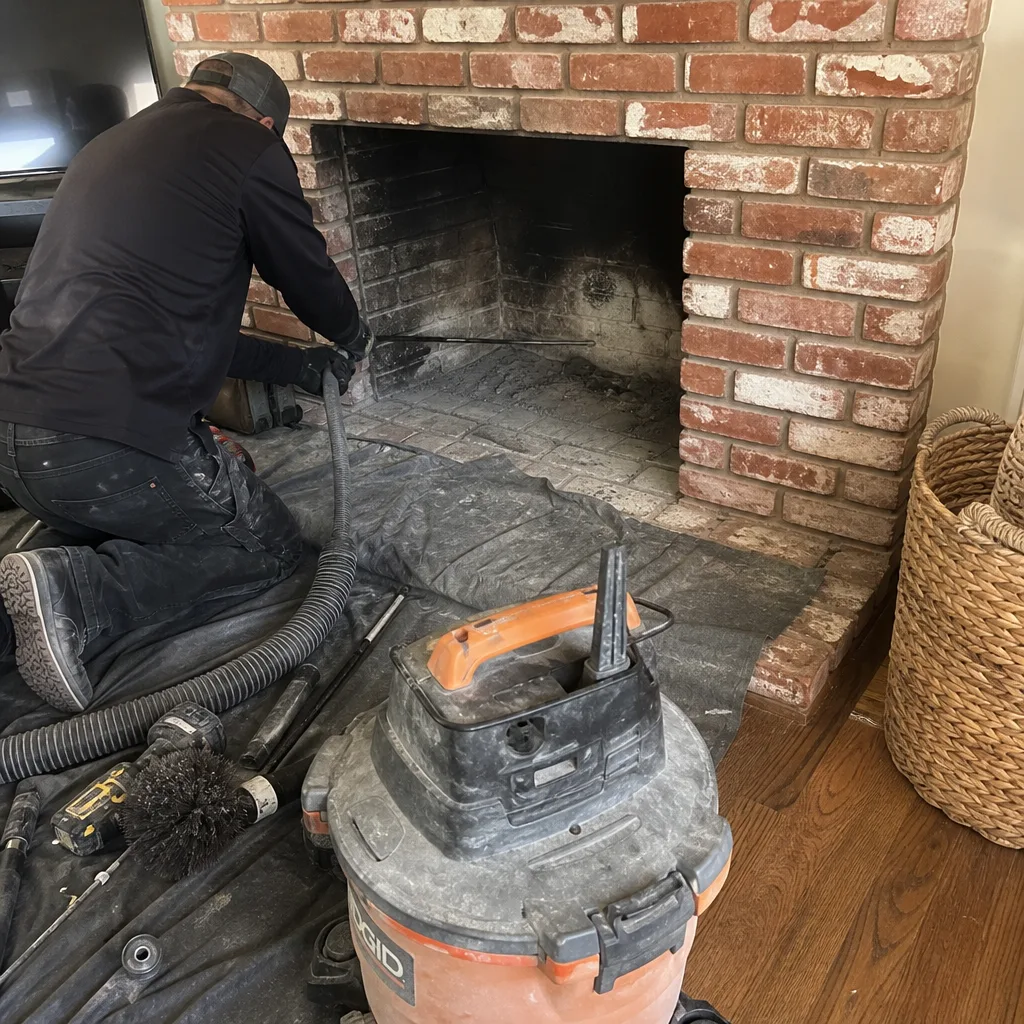 Before
 After
 Before
 After
When to Call a Professional
Call a professional when you see any of the following: cracks in the firebox refractory panels wider than a fingernail’s thickness, a damper that won’t open or close, water stains on the ceiling near the chimney, rust flakes falling into the firebox, or a dryer that’s taking noticeably longer to dry clothes than it did six months ago. For a deeper look at common issues, see our Chimney Sweep Troubleshooting: Common Problems and How to Fix Them. Call before the first burn of the season if you haven’t had a camera inspection in more than two years, regardless of how few fires you’ve had. And call after any weather event that dumped significant rain, because Orange’s dry climate means the chimney flashing and crown sealant degrade from sun exposure even without rain, and a heavy rain event is often what finally lets water through. Prestige Chimney offers free estimates in Orange, call (833) 407-0587.
Frequently Asked Questions
A chimney sweep in Orange typically ranges from $200 to $350 for a standard prefab or masonry system, with the price varying based on flue height, accessibility, and whether camera inspection is included. Prestige Chimney includes camera inspection as a standard part of every sweep, and since we also do repair work, any issue detected during the sweep can be quoted and often fixed in the same visit. Call (833) 407-0587 for an exact quote; estimates are free.
In Orange’s mild climate, most homeowners should sweep their chimney every year if they burn more than 25 fires per season, and every two years if they burn fewer than 10, but the inspection should be annual regardless. The climate matters because chimneys that sit unused for most of the year collect wildlife, moisture, and rust that a heavily used chimney doesn’t, and those issues need checking even when creosote isn’t the concern.
Yes, for any chimney that’s more than 10 years old or any chimney that hasn’t had a camera pass in more than two years, because the camera is the only way to see the interior of the flue where both creosote and structural damage accumulate invisibly. In Orange, prefab systems from the 1970s through 1990s are at or past their service life, and a camera inspection is the difference between catching a failing firebox early and discovering it when a fire spreads beyond the firebox.
You can remove surface-level creosote with a brush kit, but you cannot inspect the flue interior for cracks, verify clearances, or evaluate the damper and cap from the top, which are the components most likely to fail in Orange’s sun-exposed climate. The brush removes what you can see; the professional service verifies what you can’t, and the second part is where safety actually lives.
Your dryer vent is a fire hazard hiding in plain sight. Lint accumulates inside the duct even when the lint screen is cleaned after every load, and Orange homes with long duct runs through attics or interior walls accumulate lint faster than shorter, straighter installations. A professional dryer vent cleaning every one to two years is the only way to fully clear the duct, and it’s a service we include in our Orange-specific maintenance discussions because it’s the fire risk most chimney companies never mention.
A complete chimney maintenance visit includes brush sweeping of the full flue length, camera inspection of the flue interior, damper and firebox inspection, cap and termination evaluation, and a written report documenting what was found and what was done. In Orange, we also check the exterior chase or masonry for water intrusion because our sun degrades crown sealant and flashing faster than most climates, and that water damage is the most expensive repair most homeowners in this city will ever face on their chimney.
The Bottom Line
The maintenance checklist for an Orange homeowner depends less on the calendar and more on two things: what kind of chimney you have and how often you burn. Prefab systems from the 1970s through 1990s, which dominate Orange’s tract housing stock, need refractory panel and damper checks that masonry checklists