
Last updated October 30, 2026
 Sweep & inspection
 Caps & crowns
 Flue relining
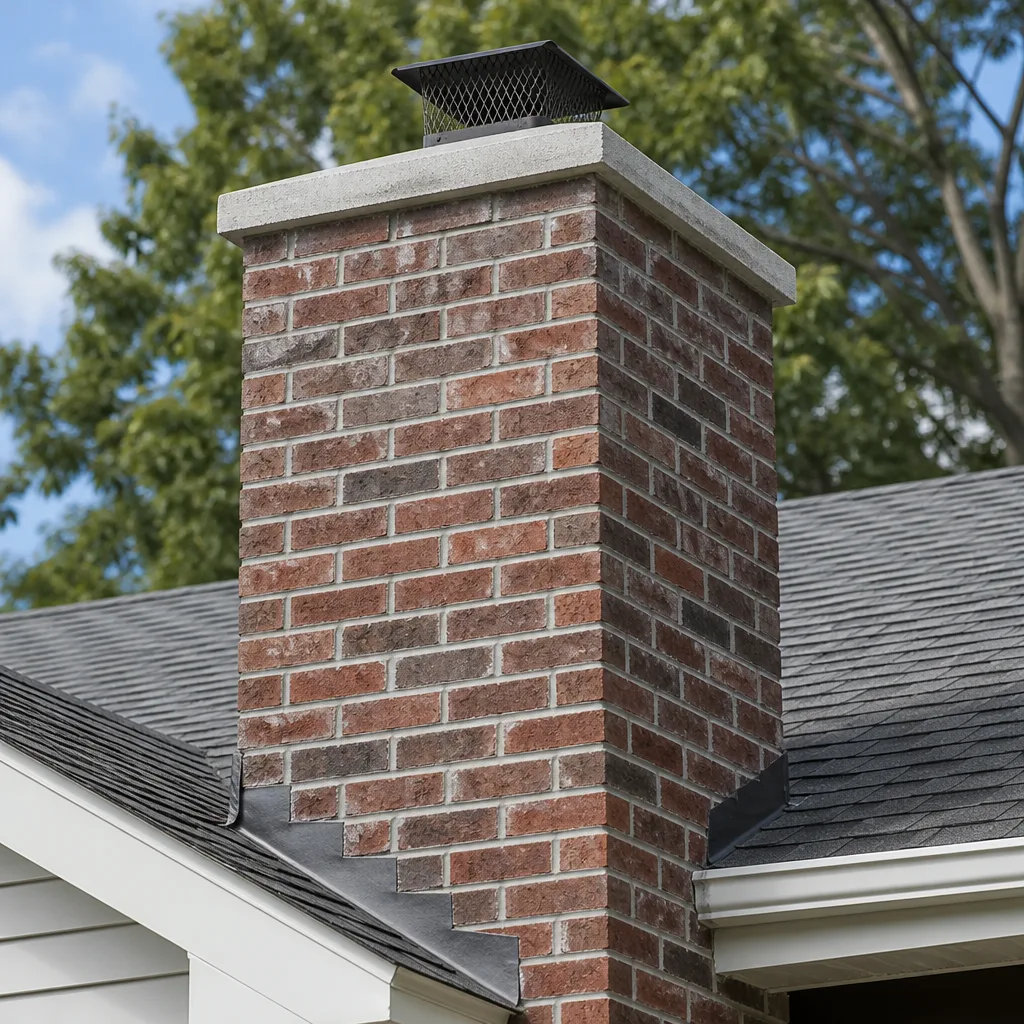 Masonry repair
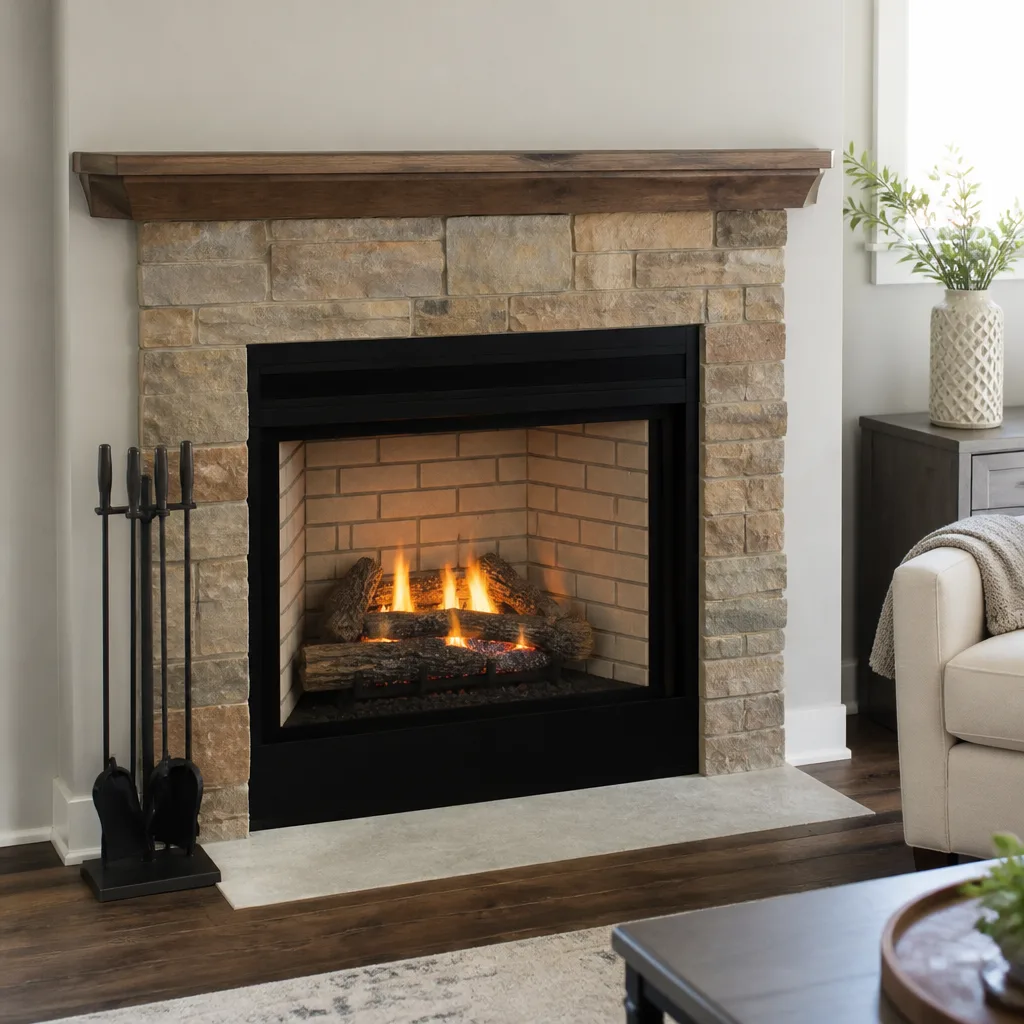 Gas fireplace service
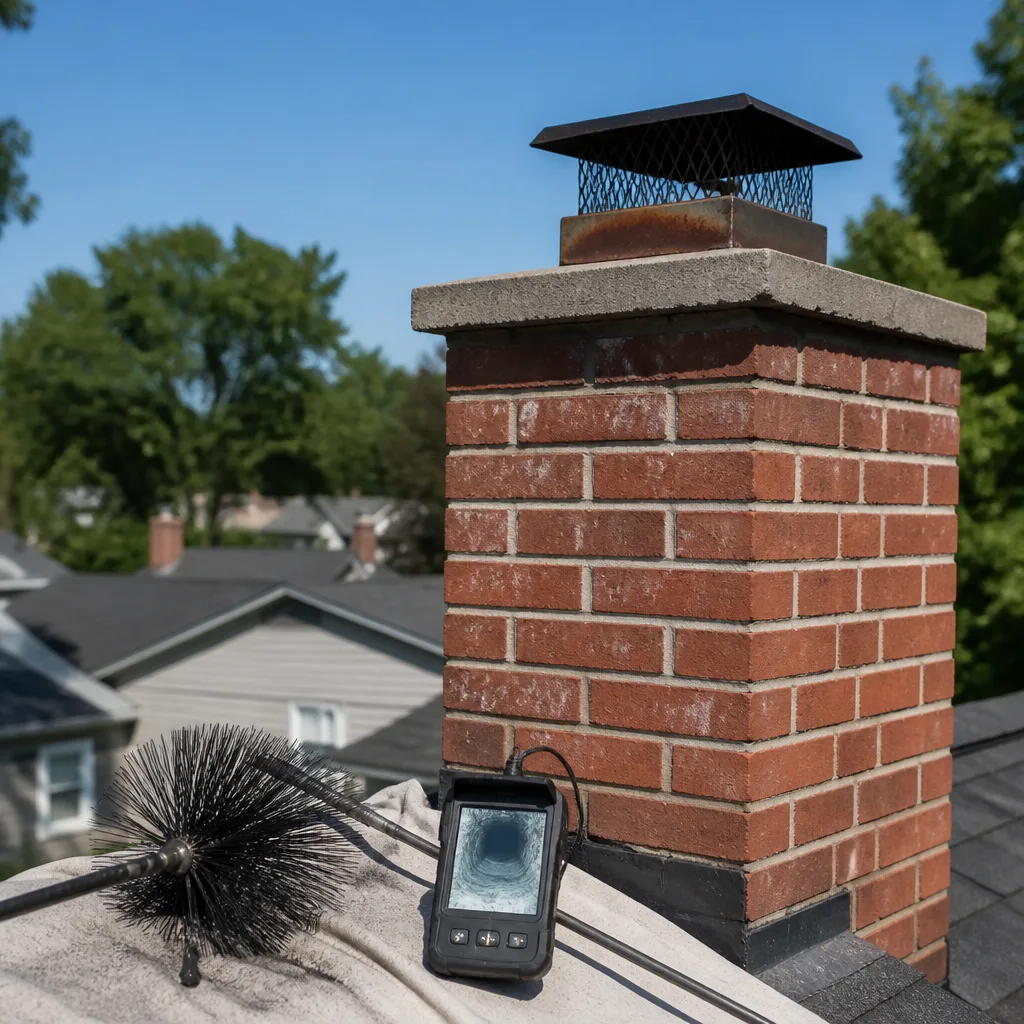
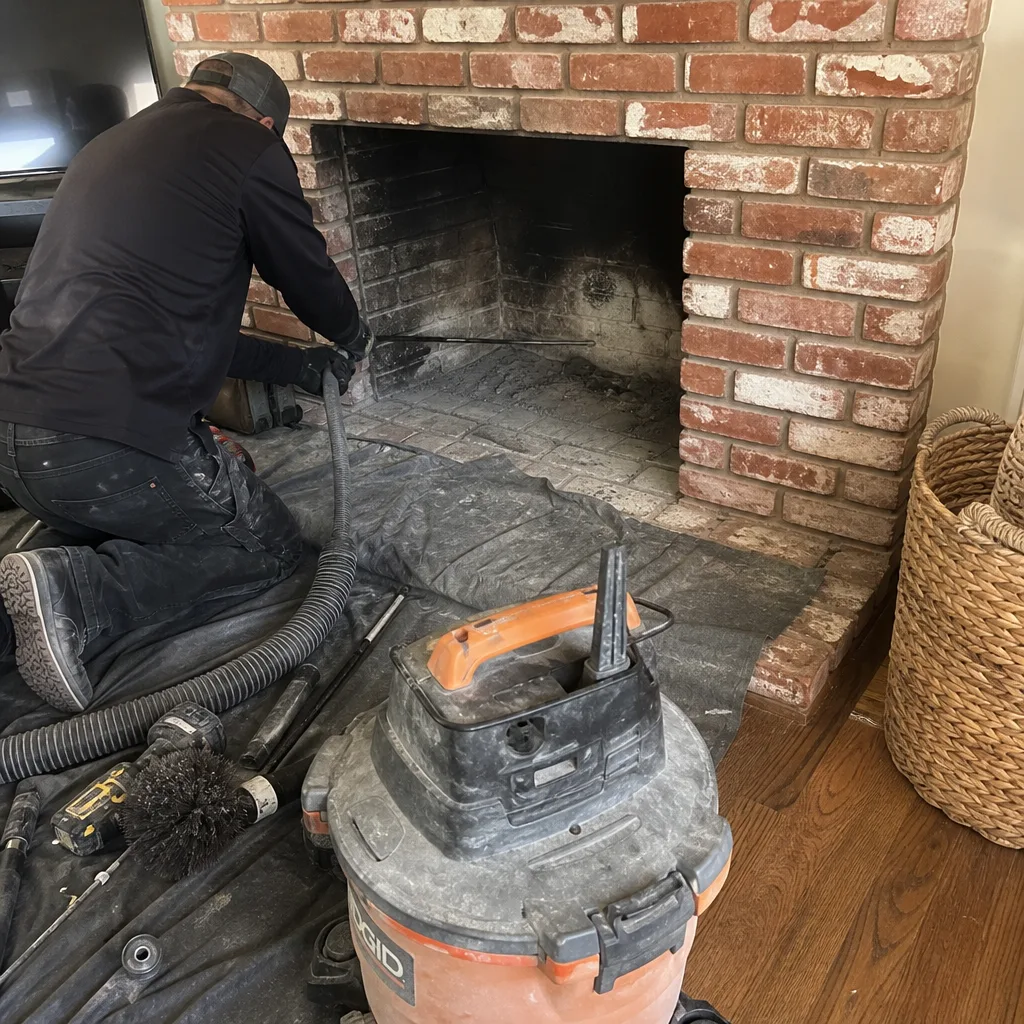
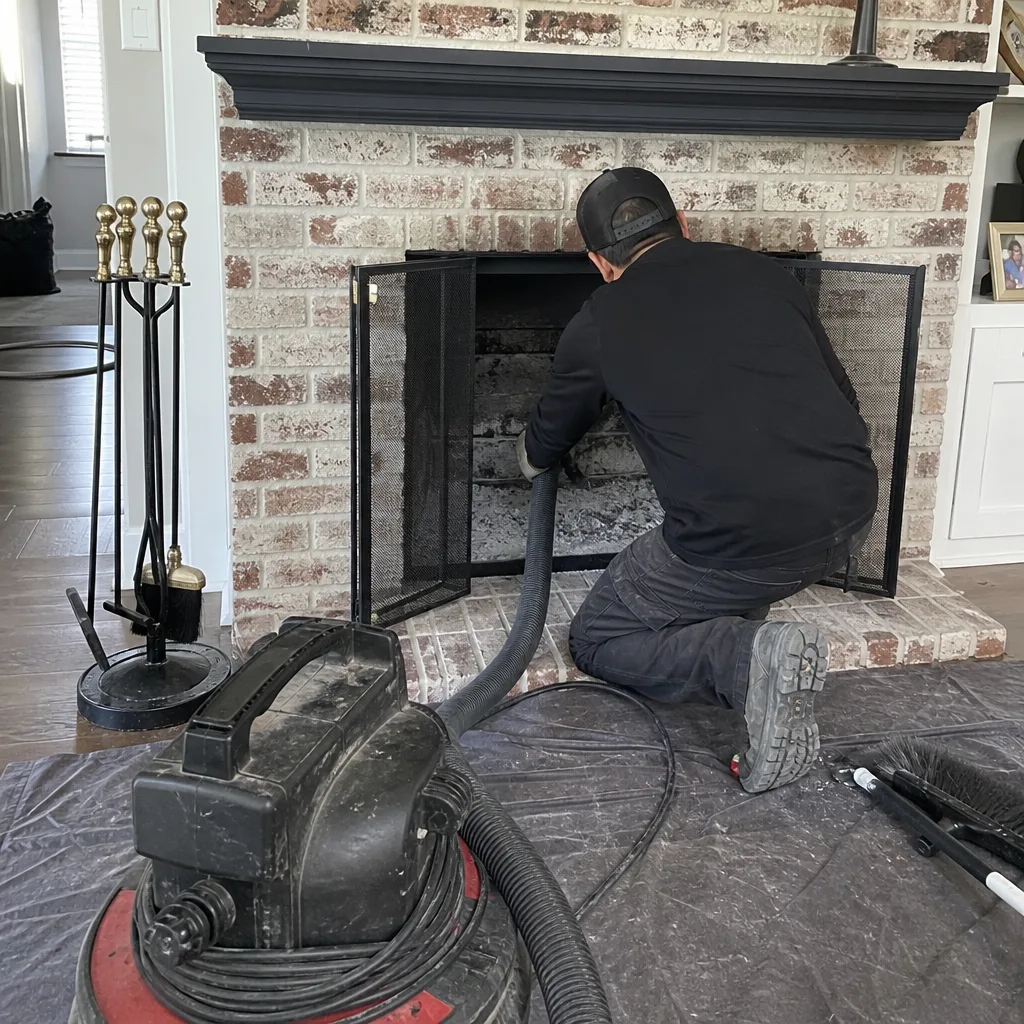
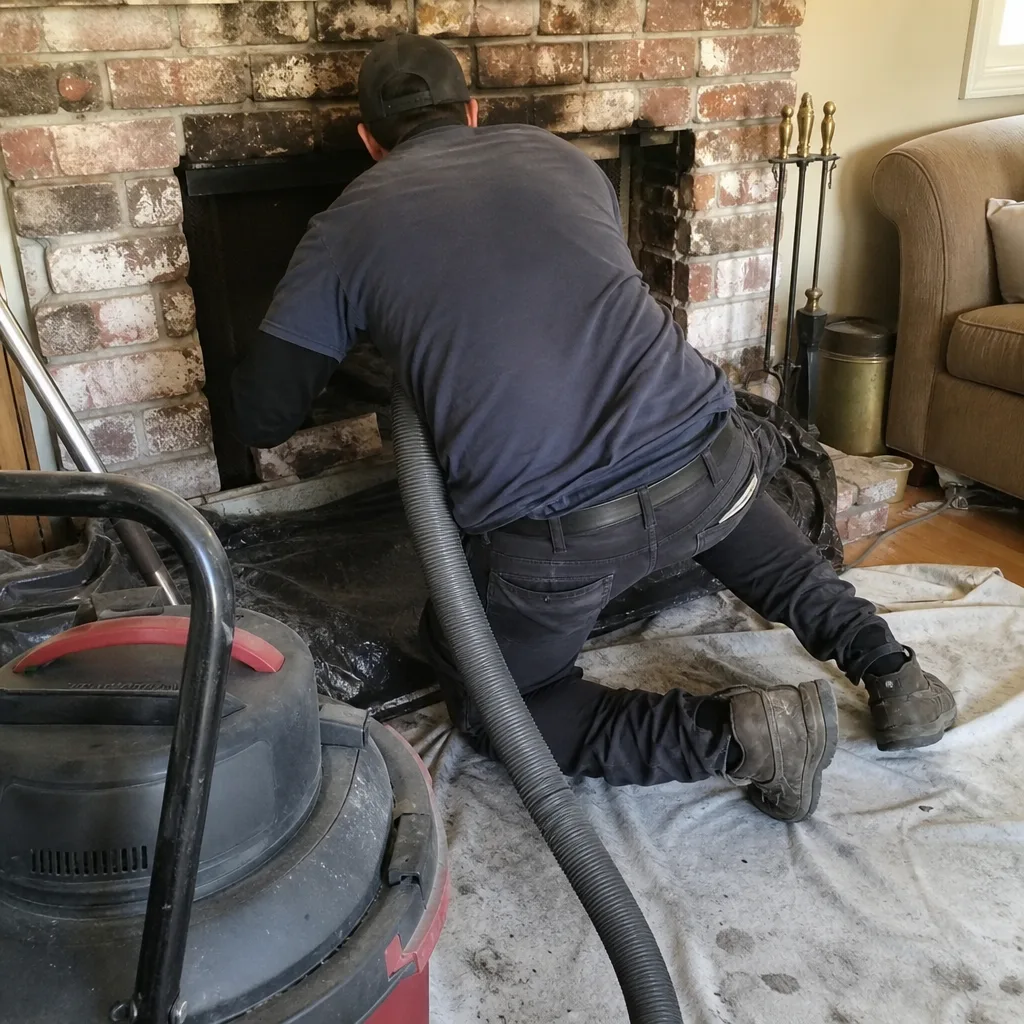
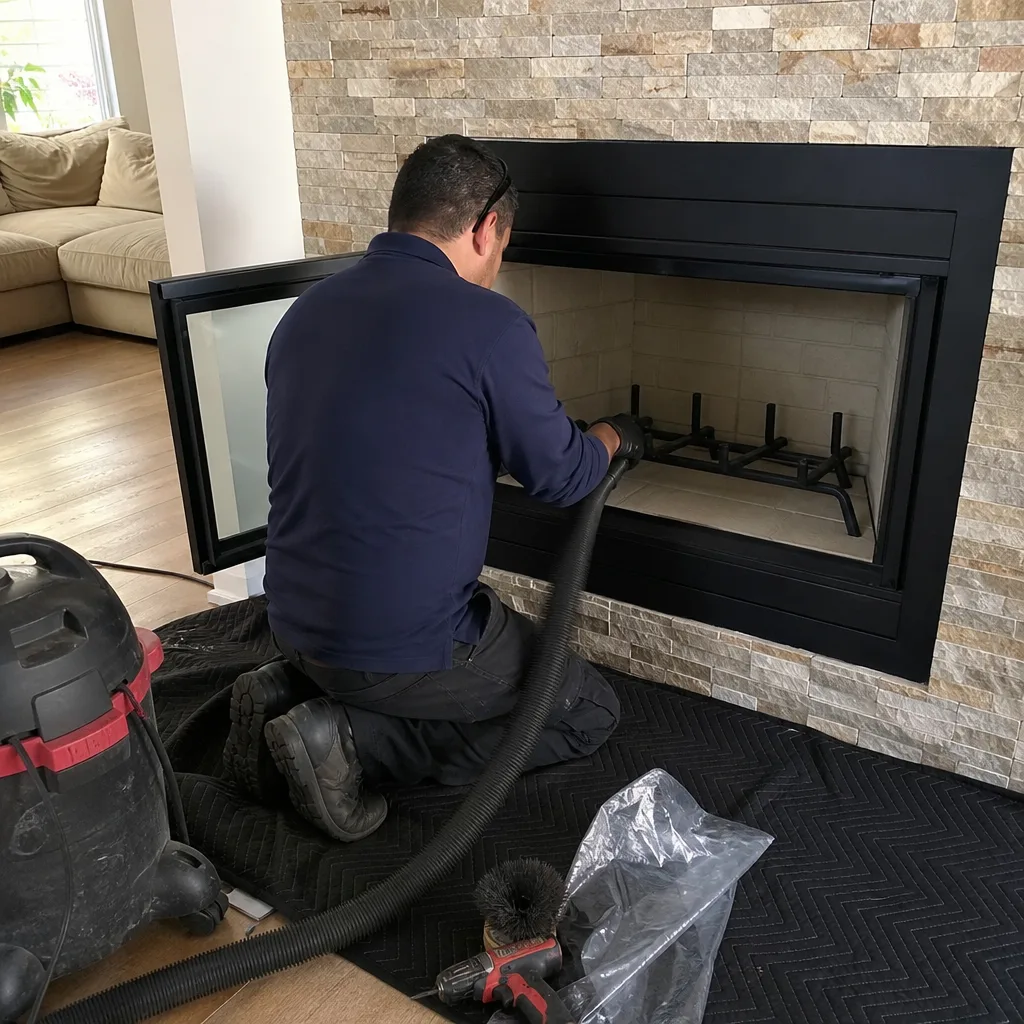
Level 1 sweep and inspection to the NFPA 211 annual standard - flue, crown, cap, and flashing checked and photographed
Chimney sweep logs do not sweep chimneys. They loosen some creosote - which then falls where a brush and vacuum still have to collect it.
Chimney Cleaning Emergency Preparedness Guide for Orange Homes
Most Orange homeowners can tell you exactly where their evacuation go-bag lives and which canyons funnel Santa Ana winds toward their street. What almost none of them have considered is that the same wind event pushing a wildfire toward their neighborhood is also forcing embers down their chimney, into a flue lined with months of creosote. During the 2017 and 2020 Southern California wind events, fire investigators identified multiple structure fires ignited not by direct flame contact but by embers entering through uncapped or deteriorated chimney systems. That mechanism is almost entirely preventable with a $45 chimney cap and a clean flue, yet it remains one of the least discussed elements of wildfire preparedness in Orange County. This guide walks through the physics, the code requirements, the emergency actions, and the prep work that turns your chimney from a vulnerability into a non-issue.
Quick Answer
Chimney emergency preparedness for Orange homes means keeping the flue swept and the cap intact so wind-driven embers can’t enter, because an uncapped or creosote-lined chimney is a verified structure-fire ignition point during Southern California wind events. The fix is simple: confirm your spark arrestor meets California Residential Code R1003.9, book a pre-season sweep and inspection, and know exactly what to do if smoke enters mid-event. For more detail, see our guide on Chimney Cleaning Permits, Codes & Inspections in CA: What You Need to Know. For a full assessment with camera documentation in Orange, call Prestige Chimney at (833) 407-0587.
Styles & brands we work with
Table of Contents
- How Ember Intrusion Actually Works
- What California Code Requires of Your Chimney Cap
- What to Do If Fire or Smoke Enters Mid-Event
- The Pre-Season Inspection as Insurance Documentation
- The Dryer Vent Emergency Risk Nobody Mentions
- A Homeowner’s Pre-Wind-Season Chimney Checklist
- Common Mistakes to Avoid
- When to Call a Professional
- Frequently Asked Questions
How Ember Intrusion Actually Works
The mechanism is less dramatic than a wall of flame and that’s exactly why it catches people off guard. During high-wind events in Orange County, particularly those driven by Santa Ana conditions, embers can travel a mile or more ahead of the main fire front. When those embers hit a home, they don’t just land on the roof or collect in gutters. They get pushed down into any opening they can find, and an uncapped or poorly capped chimney is one of the most efficient routes into the interior of a house.
Here’s the physics: wind striking the side of a home creates positive pressure on the windward face and negative pressure on the leeward side. A chimney opening, especially one without a proper cap, acts as a pressure release point. The same downdraft that occasionally blows smoke into your living room on a gusty day is, during a wind event, a conveyor belt for burning material. An ember doesn’t need to travel all the way down the flue. It only needs to get far enough to contact accumulated creosote, a byproduct of wood combustion that is not just flammable but actively ignitable at temperatures far lower than most people assume.
We have inspected Orange chimneys where creosote had glazed into a hard, tar-like layer on the flue walls. That is a fuel source sitting six feet from your living room sofa. When an ember lands on that surface during a wind event with a partially open damper, the draft feeds it oxygen from below, creating a flue fire that can quickly spread into the attic framing. An open damper, even when the fireplace hasn’t been used in months, is an open airway from the outside directly into the home’s interior. It is dangerous precisely because it feels dormant.
- Downdraft pressure pushes air downward through the flue during gusts, carrying embers past a missing or failed spark arrestor.
- Residual creosote provides the fuel load, and fresh oxygen from the open damper provides the accelerant.
- Attic and roof assembly contact happens quickly because the flue chase is framed with combustible lumber in most Orange homes built before 2010.
- Uncapped chimneys are the single largest opening-to-interior vulnerability on a house during an ember storm.
The preventative math is straightforward. A cap with an integral spark arrestor costs roughly $45 for the part. A sweep costs a fraction of an insurance deductible. The failure mode they prevent has been documented repeatedly in Orange County fire investigation reports.
What California Code Requires of Your Chimney Cap
California Residential Code section R1003.9 is the governing standard for spark arrestors in Orange and throughout the state. It is not a suggestion and it is not grandfathered in on older construction. The code states that any chimney serving a solid-fuel or liquid-fuel appliance must terminate with a spark arrestor that meets specific mesh and coverage requirements. If your home has a fireplace that burns wood, the standard applies to you.
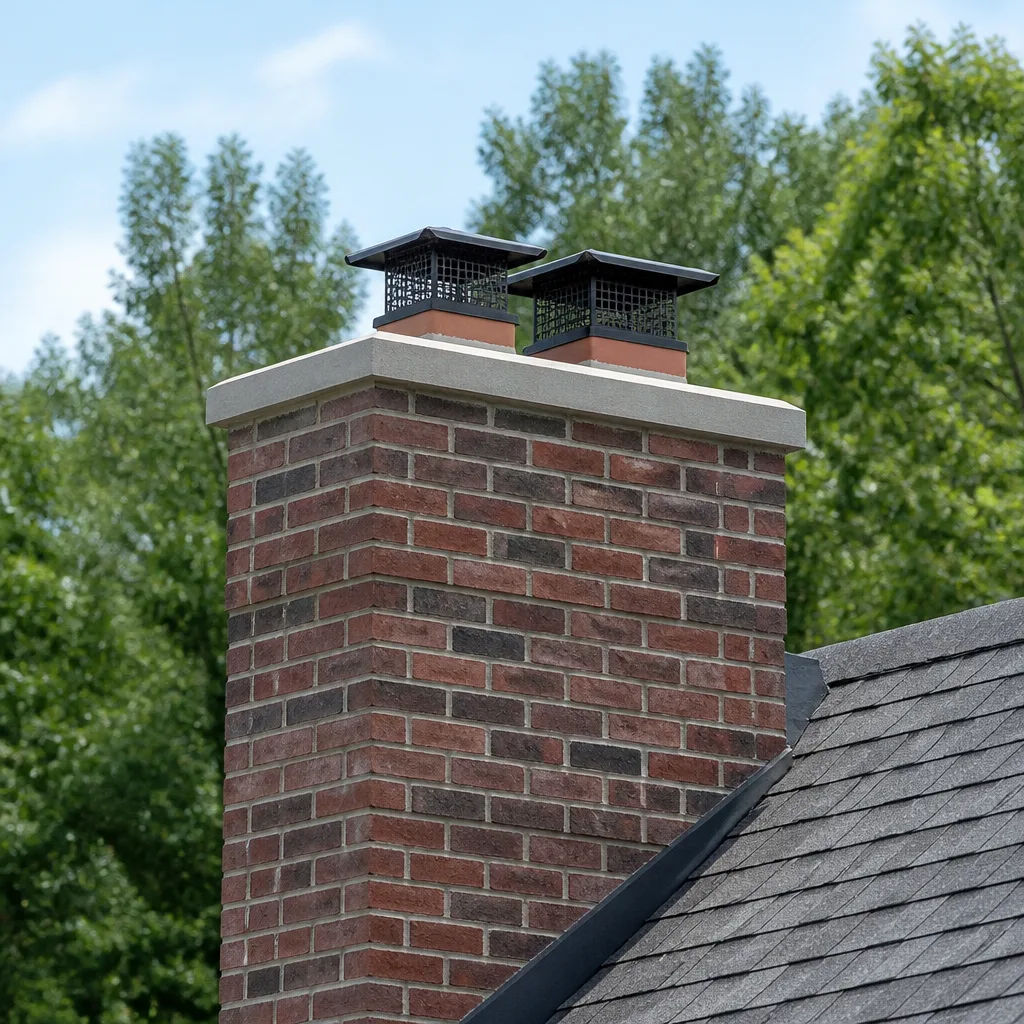
The specification matters more than most homeowners realize. The mesh openings on the spark arrestor must be no larger than half an inch, and the material must be corrosion-resistant, typically stainless steel or copper alloy. The arrestor must cover the entire flue outlet and extend past the flue tile far enough that embers cannot bypass the mesh at the edges. A cap with torn mesh, a rusted-out crown, or a missing side skirt is functionally not a spark arrestor at all.
In Santa Ana conditions, Orange County fire authorities issue red flag warnings that prohibit open burning and, in unincorporated areas, restrict certain equipment use. Those warnings don’t require you to install a spark arrestor, because the code already requires it year-round. What many homeowners don’t know is that a code-compliant arrestor does not require retrofitting the entire chimney. It sits on the flue crown and is a mechanical installation, not a structural one.
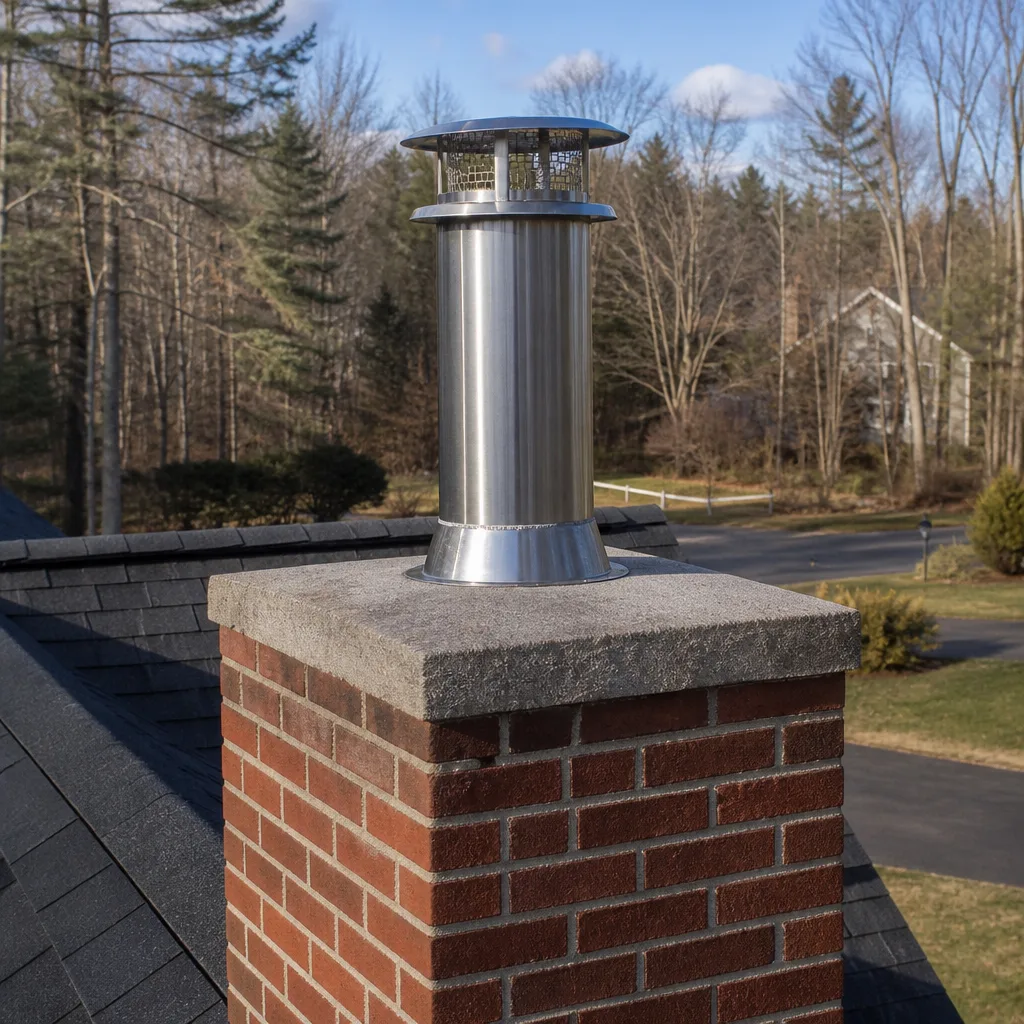
Brands like Olympia Chimney and Copperfield manufacture spark arrestors and caps that are specified by chimney professionals throughout California, and they are what we install on Orange homes. The difference between a hardware-store cap and a professional-grade unit is meaningful: wire gauge, mesh density, corrosion resistance, and fit tolerance all determine whether the cap survives years of Santa Ana grit. A poorly fitted cap can shift under wind load and create a gap at the flue edge, which defeats the entire purpose.
How to Verify Your Existing Cap
- Visually inspect the cap from the ground or roofline with binoculars. Look for rust, missing mesh sections, or a cap that appears tilted or shifted.
- Check the mesh opening size. If you can push a pencil through the mesh, the openings are too large to meet the half-inch code standard.
- Look for gaps between the cap skirt and the flue tile. Any visible daylight at that seam is an ember pathway.
- If you are uncomfortable on a ladder, schedule a professional inspection with camera documentation. We provide this service with every chimney sweep in Orange.
What to Do If Fire or Smoke Enters Mid-Event
This is the section most preparedness guides skip, because it is uncomfortable to write. If a wind-driven ember storm is active around your Orange home and you notice smoke entering through the chimney, you have minutes to act, not hours. The order of operations matters and it is not intuitive.
First: close the damper immediately. This cuts off the oxygen supply from inside the home. Closing the damper does not fully seal the flue, but it dramatically reduces the draft that would otherwise fan a creosote fire. Do not open the fireplace doors or reach into the firebox. Do not throw water down the chimney, which can cause thermal shock and crack the flue liner, turning a contained problem into a structural one.
Second: assess what you are actually seeing. If the smoke is thin, wispy, and intermittent, what you are observing is downdraft smoke from outside, not a chimney fire. In that case, keep the damper closed, monitor the situation, and only act further if the smoke thickens or you hear a roaring sound in the flue. A roaring or sucking sound, combined with heavy smoke and visible sparks from the chimney top, indicates an active flue fire.
Third: call 911 if any of the following are present. Visible flame from the chimney top, heavy smoke filling the room, heat radiating from the fireplace wall, or a crackling sound inside the flue chase framing. A flue fire is not a homeowner-manageable event. The fire department can extinguish a flue fire, but only if they arrive before it transitions into attic framing. Every minute spent trying to manage it yourself reduces their window.
What not to do: do not go onto the roof during an ember storm, do not attempt to seal the chimney top while embers are actively falling, and do not assume that closing the fireplace doors will contain a flue fire, because the fire is inside the flue itself, not in the firebox.
Once the event is over and the fire department has cleared the home, schedule a professional chimney inspection before using the fireplace again. A flue fire can damage the liner in ways that are not visible from the outside.
The Pre-Season Inspection as Insurance Documentation
Most Orange homeowners think of a chimney sweep as a cleaning task. It is also a documentation event with real insurance consequences. If a wind-related chimney fire damages your home, your insurance adjuster will ask a specific set of questions: when was the chimney last inspected, was it cleaned recently, and do you have documentation of the flue condition before the event. If your answer is a vague memory of a sweep five years ago, the claim gets contested. If your answer is a dated inspection report with camera images showing a clean flue and an intact cap, the conversation shifts.
A pre-season inspection functions as a snapshot of chimney condition at a specific point in time. It records creosote levels, liner integrity, cap condition, and damper function. That record is relevant whether the chimney was the ignition point or not, because it establishes that you maintained the system as a responsible homeowner. Adjusters and claim evaluators respond to documentation, not explanation.
We recommend the inspection happen in late summer or early fall, before the first red flag warning of the season. Orange County’s wildfire season now stretches well beyond the traditional October window, and scheduling in August means the inspection report is dated before any plausible wind event. The sweep itself removes the creosote that would otherwise serve as fuel, and the camera inspection confirms whether the interior of the flue is in condition to survive an ember storm without igniting. That combination of cleaning plus documentation is the highest-leverage preparedness step a fireplace owner can take.
Our chimney repair team in Orange also evaluates liners for stress cracks and failed mortar joints during the same visit, because a deteriorated liner changes the risk profile dramatically. A flue with cracks in the clay tile is an ember pathway into wall cavities, even if the cap is perfect.
The Dryer Vent Emergency Risk Nobody Mentions
Preparedness checklists for wind events don’t mention clothes dryers, which is a genuine gap. Here is the scenario: a red flag warning is in effect, evacuation orders are possible, and residents are doing extra laundry, washing go-bag clothing, towels, blankets, anything that might be needed at a shelter or in the car. More drying cycles means more lint loading in the vent duct. On a normal day, that lint is just an efficiency problem. On a high-fire-risk day in Orange, where ambient embers are already a threat, it is another ignition source.
Lint is dryer-dispersed cotton fiber, which is highly combustible. The U.S. Fire Administration identifies clothes dryers as the leading appliance-related fire cause in American homes, and the ignition point is almost always the vent duct, not the dryer itself. A clogged vent keeps moist air in the duct longer, allowing lint to accumulate and dry, and the thermal load rises with each cycle. During an emergency-prep laundry push, a household might run five or six cycles back to back, which is the exact condition that pushes a borderline vent into a smolder.
The emergency preparedness angle is this: if a wind event is approaching, the last thing you want is a smoldering lint fire inside a wall cavity while you are either evacuating or distracted by evacuation logistics. Most chimney-focused companies don’t offer dryer vent cleaning in Orange, which means homeowners have to call a separate contractor and often skip it entirely. We treat the dryer vent as part of the same household ignition-risk assessment, because in an ember storm, every opening and every fuel source matters.
Dryer Vent Pre-Event Checks
- Run one cycle and check the exterior vent flap while the dryer is operating. It should be pushed fully open by airflow.
- If the flap barely moves or the cycle takes longer than 30 minutes to dry a normal load, the duct is partially blocked.
- Ask yourself when the vent line was last cleaned. A two-year gap with regular use is enough to create a meaningful lint accumulation in a 15-foot or longer run.
- During high-fire-risk periods, limit back-to-back dryer cycles and avoid running the dryer overnight.
A Homeowner’s Pre-Wind-Season Chimney Checklist
This is the operational chimney sweep maintenance checklist for Orange homeowners preparing for wind season. It is ordered by priority, not by ease, because the first three items address the mechanisms most responsible for wind-related chimney failures.
- Verify the cap and spark arrestor. Look for rust, missing mesh, or gaps at the flue seam. A code-compliant arrestor is your first and best line of defense against ember intrusion.
- Book a professional sweep and camera inspection. The sweep removes the fuel, and the camera documents the flue condition for insurance purposes.
- Repair any liner cracks or failed mortar joints. A cracked liner is an ember pathway that bypasses the cap entirely. If the damage is limited, a HeatShield restoration may be possible, which avoids a full liner replacement.
- Clean the dryer vent duct. This is a separate system from the chimney but a significant ignition risk during high-use, high-fire-danger periods.
- Record the date and results of each step. Your documentation is evidence of maintenance, and evidence is what insurance adjusters respond to.
- Confirm the damper opens and closes fully. A sticky or partially open damper is a year-round draft problem and an active airway into the home during wind events.
Common Mistakes to Avoid
- Assuming a cap is optional. In Orange County, the governing assumption should be that an ember storm will find any uncapped flue. A cap is not decorative; it is the difference between a home that survives a wind event and one that does not.
- Running the fireplace during a red flag warning. Even with a spark arrestor, opening the damper and actively burning wood during an ember storm is needlessly risky and may violate local burn restrictions.
- Closing the damper and assuming the chimney is sealed. A closed damper reduces draft but does not seal the flue. Embers can still enter and contact creosote above the damper plate.
- Using a hardware-store cap that doesn’t fit. A cap that doesn’t seat properly on the flue tile shifts over time and creates the exact gap it was meant to close. Professional-grade caps from brands like Famco or Copperfield are sized to the flue, not generic.
- Ignoring the dryer vent. Most preparedness planning treats the chimney and the dryer separately, but both are openings through the home’s envelope that can carry ignition into wall cavities.
- Assuming an annual sweep is unnecessary if the fireplace is rarely used. Creosote accumulates from wood burning, but soot from gas appliances and general dust also coat flue walls. In Orange, occasional use still produces residue, and residue is fuel.
When to Call a Professional
Call a chimney professional if you see visible rust or missing mesh on your cap, if smoke enters your living room during gusty days, if your fireplace hasn’t been swept in two years or more, if you smell stale soot after a hot day, or if a previous flue fire was never followed up with a camera inspection. Call if your dryer takes 45 minutes or longer per load, or if the exterior vent flap doesn’t open fully during operation. These are the specific, observable conditions that signal a system moving from dormant to dangerous. Prestige Chimney offers free estimates in Orange, call (833) 407-0587, and we can assess chimney and dryer vent systems in a single visit.
Frequently Asked Questions
A professional-grade chimney cap with an integral spark arrestor typically costs $45 to $150 for the part, with installation adding labor depending on roof access and flue configuration. Brands like Olympia Chimney and Copperfield produce caps that meet California code and survive Orange County’s coastal and wind conditions far longer than budget alternatives. Call (833) 407-0587 for an exact installed price for your specific flue.
Yes. Fire behavior research from Southern California has documented ember transport of over a mile from the main fire front during Santa Ana wind events, and roof-level entry through chimneys and vents is a primary cause of home ignition at that distance. An uncapped chimney is an unprotected opening in exactly the position where embers concentrate.
The National Fire Protection Association recommends sweeping whenever creosote reaches one-eighth inch thickness, and practical guidance for Orange fireplaces that burn wood regularly is an annual sweep. For more guides & resources on keeping your system safe, explore our blog. Homes that use the fireplace only a handful of times per season can often go two years, but a camera inspection should confirm flue condition regardless of frequency. For a swept and documented flue before wind season, call (833) 407-0587.
Yes, because the cap only protects the flue opening. A crack in the clay tile or a failed mortar joint creates an escape route for heat and embers into the flue chase framing, which is typically combustible lumber in Orange homes. A cap stops top-down entry but does nothing for lateral escape through liner damage.
Yes. Keep the damper closed and the fireplace doors shut during red flag warnings even if the fireplace is not in use, because an open damper creates a draft path from the flue top down into the living space. Embers that enter the flue can be pulled toward the interior with surprising force under gusting conditions.
HeatShield is a ceramic-cement liner restoration system that restores flue integrity by sealing cracks and rebuilding spalled surfaces, and it is specified by chimney professionals nationwide as an alternative to full liner replacement when the underlying structure is sound. A camera inspection is the only way to determine whether your Orange home qualifies for restoration or requires a different repair path. Call (833) 407-0587 for a free assessment.
The Bottom Line
Chimney emergency preparedness for Orange homes comes down to four actions: verify the cap, sweep the flue, document the condition, and do not ignore the dryer vent. The failure mode that catches homeowners off guard is not the dramatic wall of flame, it’s the single ember that finds its way down an unprotected flue and finds fuel waiting for it. Orange County’s wildfire interface zone makes that failure mode a year-round risk, not a seasonal one. A couple hundred dollars of maintenance on a clean, capped, documented chimney is the difference between a home that weathers wind season and one that becomes a statistic. The Prestige Chimney home team handles sweep, repair, and dryer vent work under one roof, so a single visit can close all three of the highest-priority gaps.
Written by the team at Prestige Chimney, serving Orange since 2017.
See the difference
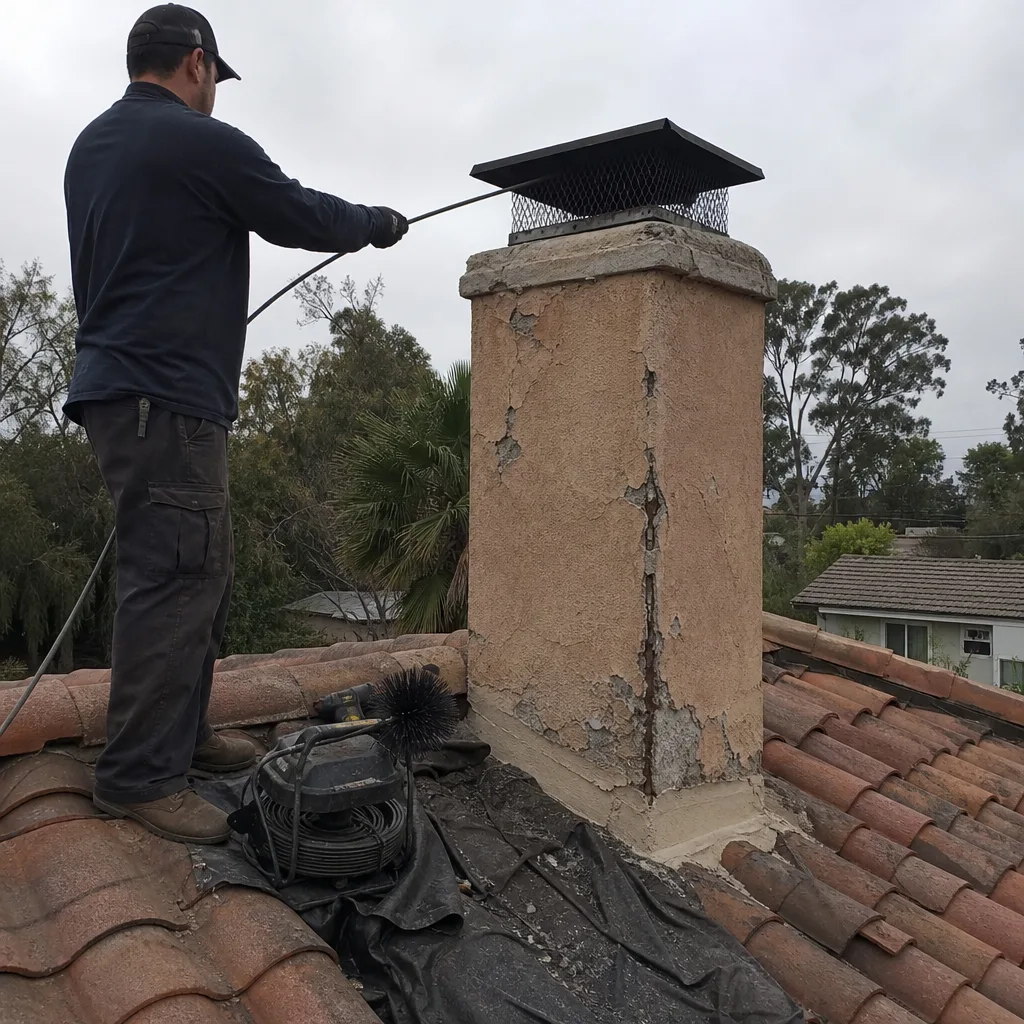 Before
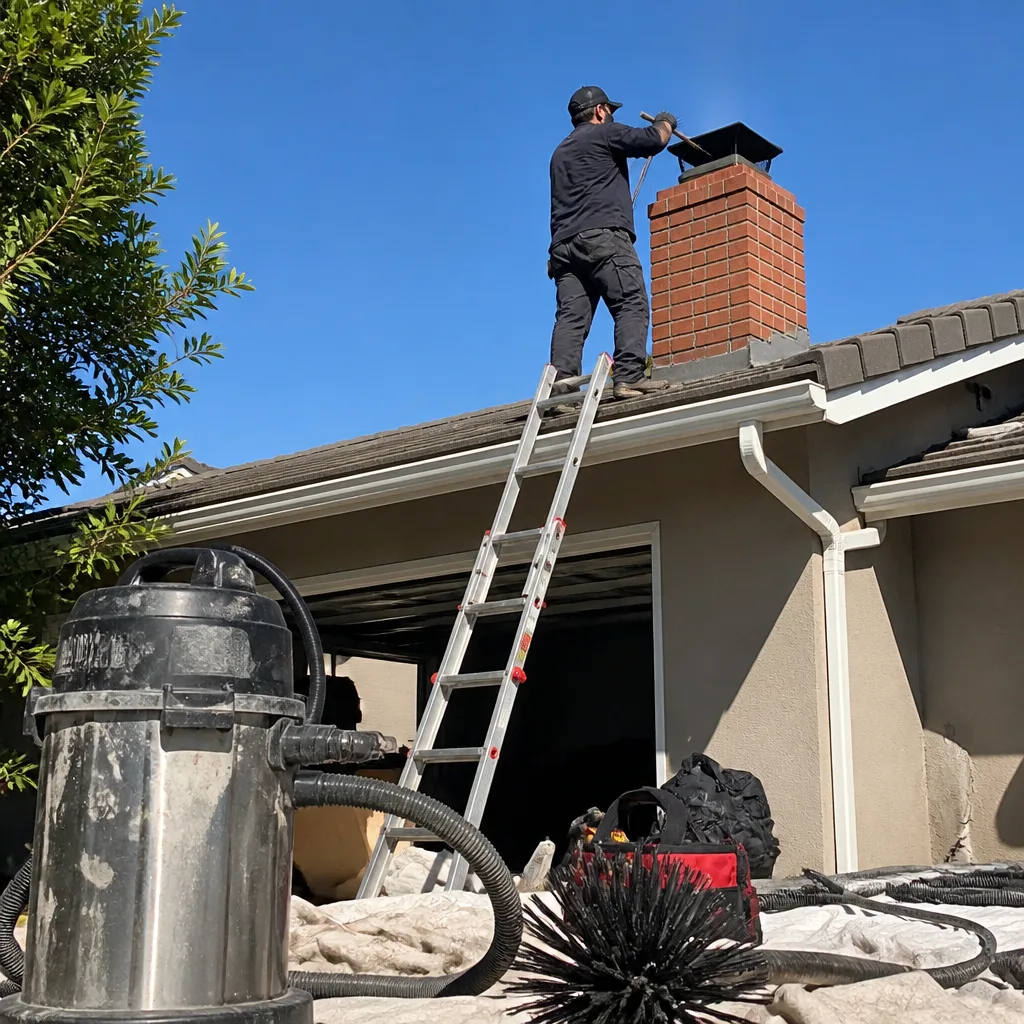 After
 Before
 After
 Before
 After