
Last updated October 30, 2026
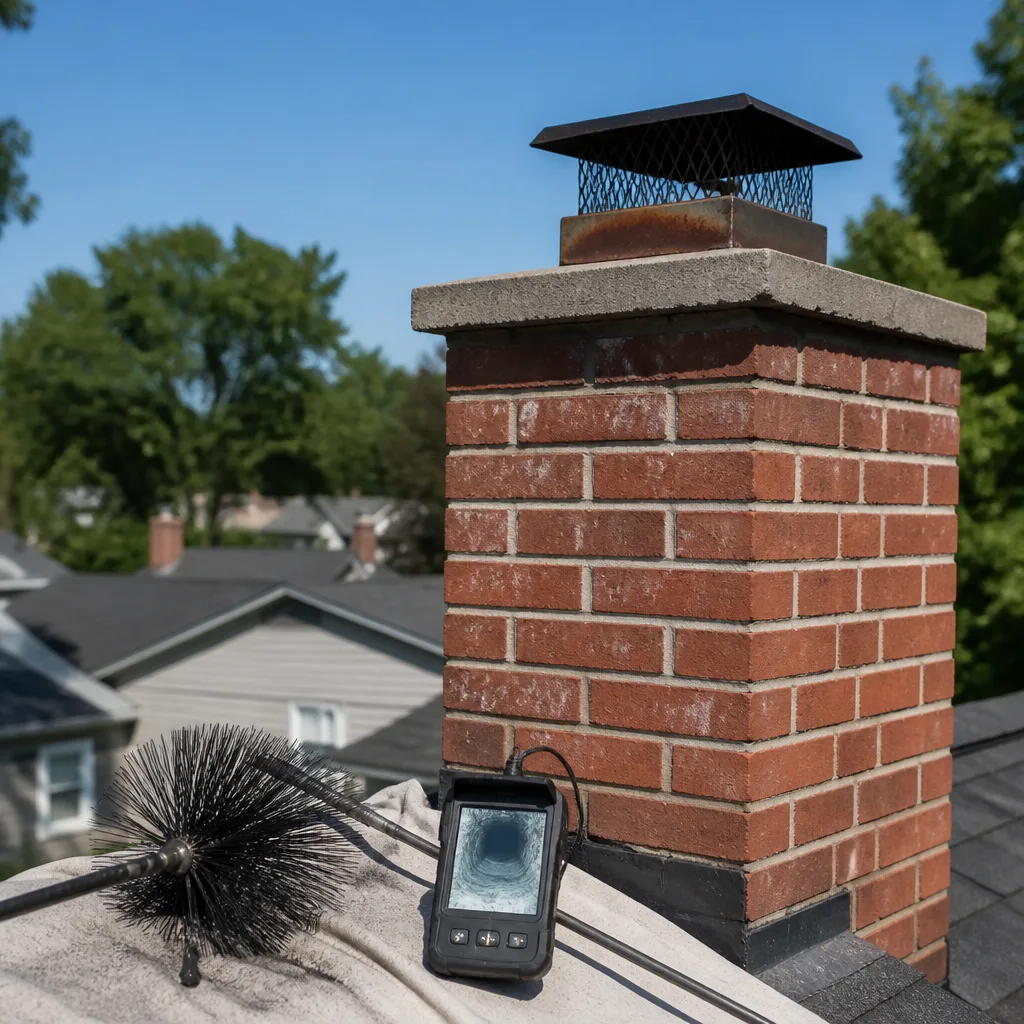 Sweep & inspection
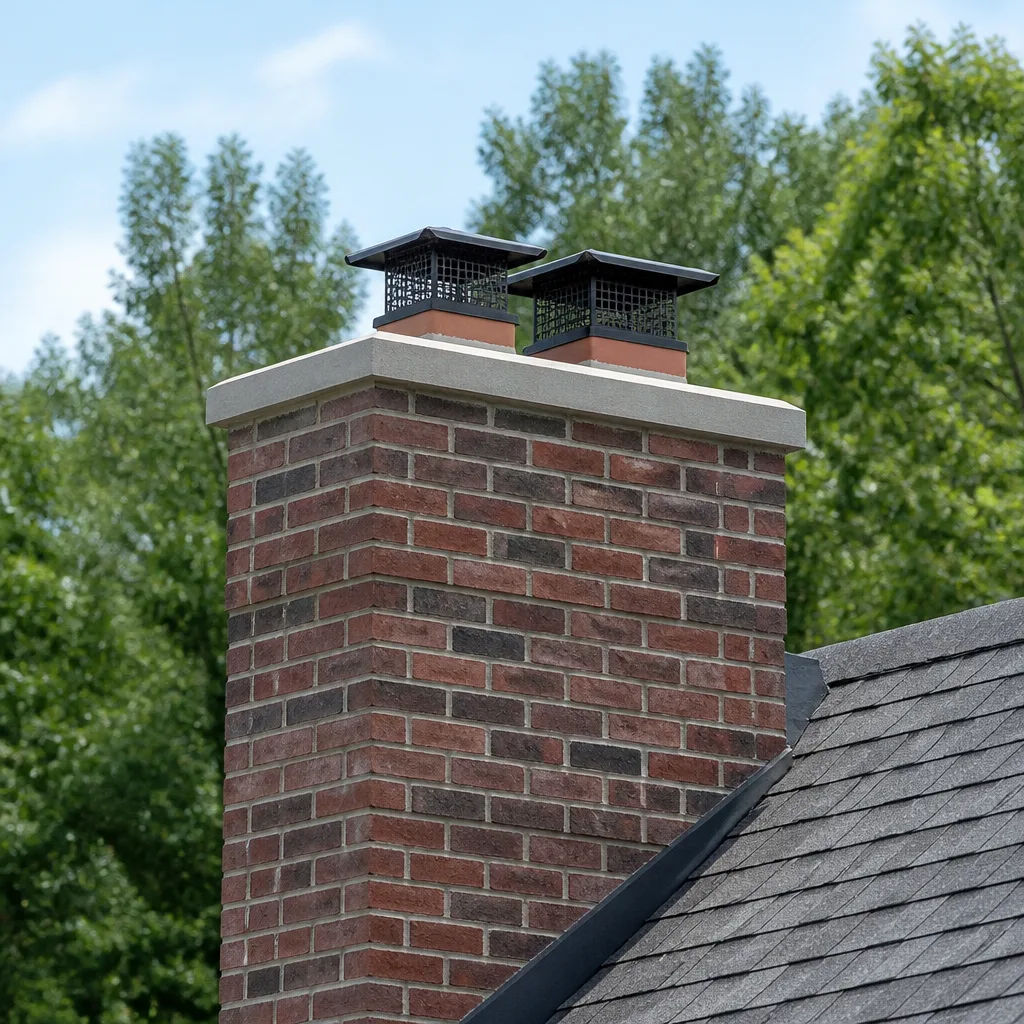 Caps & crowns
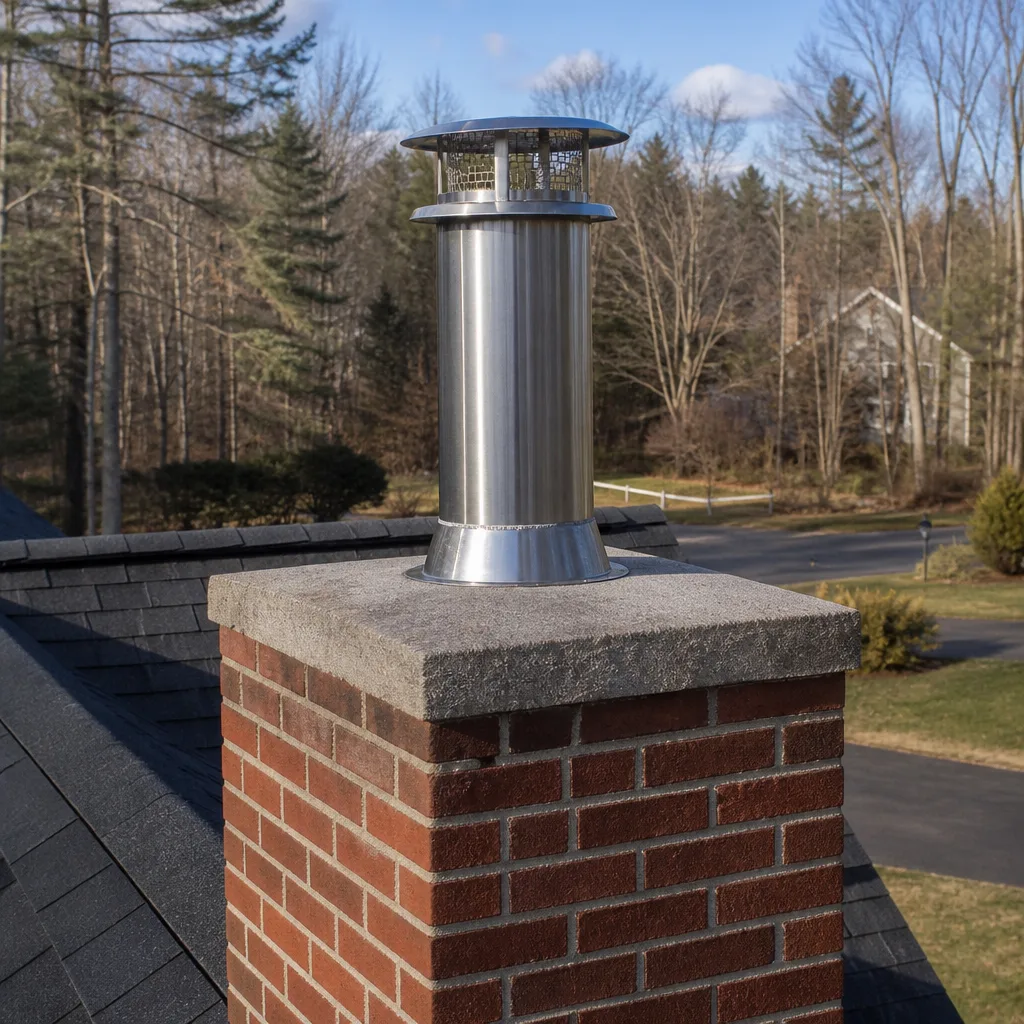 Flue relining
 Masonry repair
 Gas fireplace service
Level 1 sweep and inspection to the NFPA 211 annual standard - flue, crown, cap, and flashing checked and photographed
Chimney sweep logs do not sweep chimneys. They loosen some creosote - which then falls where a brush and vacuum still have to collect it.
DIY vs Professional Chimney Cleaning: The Orange Homeowner’s Decision Guide
Every winter, somewhere in Orange, a homeowner stands in the fireplace aisle of a hardware store holding a $40 chimney brush kit and wondering if they’re about to save $200 or waste a Saturday. The uncomfortable truth: most chimney fires in Southern California don’t happen in neglected fireplaces. They happen in fireplaces that someone “cleaned” themselves. The reason is simple and rarely explained. Hardware store brush kits are built for Stage 1 creosote, the light flaky soot that brushes off easily. But Orange homeowners burning wood in short, infrequent sessions on cool coastal evenings typically develop Stage 2 creosote, a hard tar glaze that laughs at a wire brush. This guide will show you exactly how to tell the difference from your firebox floor, what your homeowner’s insurance actually expects, and which tasks genuinely belong in the DIY column.
Quick Answer
DIY chimney cleaning is only appropriate when you have verified Stage 1 creosote, a light gray or brown flaky deposit that scrapes off easily. Stage 2 tar glaze and Stage 3 hardened deposits cannot be removed with consumer brush kits and require professional rotary tools and chemical treatments. In Orange, where irregular burn patterns promote tar-heavy Stage 2 buildup, most fireplaces need professional service annually unless you burn almost exclusively seasoned hardwood in long, hot fires.
Styles & brands we work with
Table of Contents
- The Creosote Problem Nobody Explains
- How to Assess Your Own Chimney Before Deciding
- What DIY Kits Actually Do (And What They Can’t)
- The Real Cost Comparison: DIY vs Professional in Orange
- Insurance and Liability: What Your Policy Actually Says
- The Legitimate DIY Zone for Orange Homeowners
- When DIY Is Off the Table Entirely
- What Orange’s Climate Means for Your Chimney
The Creosote Problem Nobody Explains
Creosote isn’t one substance. It’s three distinct deposits that form under different burn conditions, and each one responds to a completely different removal method. Understanding this is the entire game.
Stage 1 creosote is a light, flaky soot that forms during hot, efficient fires with seasoned wood. It looks like fine ash or coffee grounds and has a dusty, granular texture. A brush removes it easily. It’s the only stage a homeowner should consider tackling themselves.
Stage 2 creosote is a dark brown or black tar glaze that looks like melted licorice or thick paint. It forms when flue gases cool too quickly, which happens in short fires, cold chimneys, and when burning wood that isn’t fully dry. This is the dominant pattern in Orange homes. Our mild evenings don’t require the long, roaring fires that colder climates demand, so fires get lit for ambiance and drowned in an hour. The flue never reaches sustained high temperature, creosote never combusts fully, and tar condenses on the liner. A wire brush skids across Stage 2 glaze. Removing it requires rotary chains or chemical treatments applied by a professional.
Stage 3 creosote is Stage 2 that has baked and hardened into a shiny, candy-like coating. Think black glass. It’s fuel-dense and extremely difficult to remove even with professional equipment. In some cases, the flue liner has already been damaged beneath it. No consumer product on the market will touch Stage 3. Anyone telling you otherwise is selling something.
In our experience, maybe two or three out of every ten fireplaces we inspect in Orange have Stage 1-only deposits. The rest have some degree of Stage 2 or a mix of stages at different heights in the flue. That’s not a scare statistic. It’s why the DIY question usually answers itself once someone looks honestly at what’s inside.
How to Assess Your Own Chimney Before Deciding
You don’t need to climb on your roof to get a preliminary read. This method, done carefully from the firebox floor, will tell you whether the DIY question is even worth asking. You’ll need a strong flashlight, a fireplace poker or metal scraper, and a fireplace-rated drop cloth to keep ash off your floor.
Here’s the step-by-step assessment we recommend to Orange homeowners before they reach for a brush kit or a phone—part of our How to Hire a Chimney Cleaning Contractor in Orange: A Step-by-Step Guide:
- Open the damper fully. You need line of sight up toward the flue. If your damper is rusted or won’t open, that’s already a problem worth a professional look, because a stuck damper means the fireplace has been used with improper draft.
- Lay down a drop cloth and position the flashlight to shine upward. You’re looking for deposits on the flue walls at the throat and as far up as you can see. A mirror angled upward helps if your neck complains.
- Identify the color and texture of what you see. Flaky brown or gray dust is Stage 1. Shiny black glaze that looks wet or tar-like is Stage 2. Hard, glassy black with a candy coating appearance is Stage 3.
- Scrape a test patch with the poker. Reach carefully to the flue wall at the throat and drag the scraper across the deposit. If it flakes off like dry toast crumbs, it’s Stage 1. If it smears or barely marks, it’s Stage 2. If the poker skates across and you hear a hard drag, you’re looking at Stage 3.
- Check the smoke shelf. The flat area just above the firebox collects debris and creosote drippings. If you see thick black sludge or piles of flaky debris an inch or more deep, that’s a professional cleaning signal regardless of what the flue walls show.
This is a visual assessment, not a substitute for a full inspection. It cannot see the upper third of your flue, where creosote often concentrates, and it cannot see cracks in the liner, damaged mortar, or animal nests. A full inspection requires camera equipment or at minimum a direct top-down view with the right tools. But as a decision gate, this five-minute check will prevent most Orange homeowners from wasting money on a brush kit that can’t help them.
What DIY Kits Actually Do (And What They Can’t)
The typical chimney sweep kit at Home Depot or Ace Hardware contains a wire brush head, fiberglass or poly rods in four-foot sections, and sometimes a tarp and a set of instructions. It costs between $40 and $90. It is functionally identical to what professionals used in 1980, and it is adequate for exactly one condition: a flue with light Stage 1 deposits you can reach from the top down.
Here’s what the kit won’t tell you on the box:
- Top-down access means roof access. You have to get on your Orange roof, remove the chimney cap (if you have one), and work the brush down from above. Steep-pitch or tile roofs common in Orange County homes make this genuinely dangerous. A fall from a single-story roof is a serious injury. Two stories is potentially fatal. This is the single most overlooked reason professional service exists.
- The brush diameter matters. Your flue is a specific size, typically 8″x8″ clay tile or a round liner between 6″ and 8″ for older Orange homes. A brush that’s too small won’t touch the walls. Too large and it jams. The kits usually include one generic brush size, which is why they often arrive and don’t properly fit the flue they’re meant to clean.
- The rods flex. Fiberglass rods bow when pushed, especially on taller chimneys. That means the brush scrubs unevenly, leaving stripes of creosote undisturbed. A professional rotary system uses fixed metal rods or a chain whip that maintains contact all the way down.
- No vacuum containment. Professional sweeps use HEPA-filtered vacuums that create negative pressure, keeping fine creosote dust from billowing into your living room. DIY kits generate the dust and leave it airborne. Stage 1 dust isn’t harmless to inhale, and it settles on every surface of the room.
- No inspection component. A sweep has diagnostic value. The professional isn’t just removing creosote. They’re looking for cracked tiles, deteriorated mortar joints, rusted dampers, and liner damage that a homeowner won’t recognize. The brush kit removes some soot and gives you zero information.
The uncomfortable bottom line: the DIY brush kit is a 1980s solution to a 1980s chimney. Modern chimney service in Orange means a camera inspection, rotary cleaning where appropriate, and a written report of what condition the flue is in. If you want the brush kit experience, you can find it on a hardware store shelf. If you want to know whether your fireplace is safe to burn, that’s a different transaction entirely.
The Real Cost Comparison: DIY vs Professional in Orange
Let’s be honest about what each path actually costs in Orange, because the sticker price of a brush kit is not the real cost of DIY. For a detailed look at pricing, see our Chimney Cleaning Cost Breakdown: The Orange Homeowner’s Reference for 2026.
The DIY path
- Brush kit: $40-$90 depending on rod quantity and brush quality
- Proper ladder (safe roof access): $150-$300 if you don’t already own one rated for your roof height
- Fall protection harness and anchor: $120-$200; no, it doesn’t make sense to skip this on a tile roof
- HEPA shop vacuum rental or purchase: $40-$80 for a rental day; buying runs $250+
- Drop cloths, gloves, goggles, N95 mask: $30-$50
- Time: 3-5 hours for a first-timer, including setup and cleanup
- Total real cost: $230-$520 for a one-time job once you own the gear, or $380-$720 if you buy everything new
The professional path
- Standard sweep and inspection in Orange: $180-$300 depending on chimney height, type, and accessibility
- Includes: HEPA vacuum containment, rotary cleaning matched to deposit type, full visual inspection, and a report on condition
- Camera inspection add-on: $100-$200; recommended if the chimney is older than 15 years or has any question mark from the visual inspection
- Time: 45-90 minutes, no cleanup required on your part
The math improves for DIY if you plan to clean your chimney every year for the next decade and you already own a safe ladder and are comfortable on your roof. A $70 brush kit amortizes well over ten cleanings. But here’s the catch: most Orange homeowners who try DIY do it once, discover the creosote is Stage 2 or the roof access is worse than expected, and never do it again. The kit goes to a garage shelf and the professional gets called anyway. The single-variable decision is not brush kit vs professional fee. It’s whether the flue contents are Stage 1 and whether your roof is safely accessible with the right equipment. If either answer is no, DIY costs you money and buys you risk.
Insurance and Liability: What Your Policy Actually Says
California homeowners insurance policies don’t have a specific clause that voids coverage if you clean your own chimney. What they have is something subtler and more consequential: a maintenance expectation. Your policy is a contract that assumes you will maintain the home to prevent preventable losses. A chimney fire is, in the insurer’s eyes, almost always a preventable loss. Creosote buildup is not an act of God. It’s deferred maintenance.
When a chimney fire damages an Orange home, the insurance adjuster’s first question is simple: “When was the chimney last professionally cleaned and inspected?” If the answer is a receipt from a licensed chimney sweep within the last 12 to 24 months, the claim is typically processed as covered fire damage. If the answer is “I cleaned it myself” with no documentation, the claim goes to the special investigations unit. The homeowner then bears the burden of proving the fire wasn’t caused by negligence. That’s a battle you don’t want to fight from a hotel room while your house is being dried out.
This is the unspoken cost of DIY. Not the $40 kit. The risk that a self-cleaned chimney experiences an undetected issue, catches fire, and the insurance company denies the claim because you cannot produce a professional service record. In Southern California, where wildfire-risk underwriting is already aggressive and some carriers are dropping policies over landscaping choices, the last thing any Orange homeowner needs is a denied fire claim over chimney maintenance records.
Additionally, if you perform work on your own chimney that later contributes to a fire that damages a neighbor’s property, your liability exposure expands. A professional service carries its own liability insurance. You carry yours, and you’re about to test it.
None of this means you can’t touch your chimney. It means that the parts of chimney maintenance that involve liner integrity, creosote removal from the flue, and safety certification belong on paper. Keep your receipts. If you DIY the firebox glass and ash removal, fine. If you DIY the flue cleaning, you’ve made yourself the only accountable party in a situation where accountable parties matter.
The Legitimate DIY Zone for Orange Homeowners
Let’s be fair. Not everything about chimney maintenance requires a professional. Several tasks are perfectly reasonable for a careful homeowner to perform, and doing them yourself between professional cleanings will keep your fireplace looking better and burning more efficiently. Here’s what genuinely belongs in the DIY column:
- Firebox glass cleaning. Clean the glass on your fireplace doors with a fireplace glass cleaner or a vinegar-and-water solution when the glass is cool. This improves the view of the fire and lets you monitor burn quality. Ceramic glass cleaner is preferred; household glass cleaner can etch fireplace glass over time.
- Cold ash removal. Wait at least 72 hours after your last fire, then shovel ashes into a metal container with a lid. Store it outside away from the house. Ashes can harbor live coals for days. Never vacuum ashes unless your vacuum is specifically rated for ash and equipped with a fine-particle filter.
- Ground-level cap inspection. Stand back from the house and look at your chimney cap with binoculars. You’re looking for missing cap, visible rust, or obvious animal activity like nesting material or birds entering and exiting. If you spot anything questionable, that’s a call, not a project.
- Firewood management. This is the highest-impact DIY task. Properly seasoned hardwood burns at higher temperature and produces dramatically less creosote. Stack wood off the ground, cover the top only, and let it season at least 12 months for oak and other dense hardwoods. If you hear hissing or see moisture bubbling from the end grain while burning, the wood isn’t ready.
- Smoke and carbon monoxide detector testing. Test both monthly. Replace batteries every six months. These devices are your first and last line of defense, and maintaining them is a pure DIY win.
None of these tasks touch the flue interior. That’s the line. Everything on the outside of the liner where you can reach it from the firebox floor is fair game for a careful homeowner. Everything inside the flue beyond what you can see from that mirror-and-flashlight position is professional territory, because it’s governed by deposit type, access safety, and the diagnostic value a professional brings.
If you handle these maintenance items between professional cleanings, you’ll extend the intervals where the fireplace operates cleanly and you’ll have a better eye for when something changes. Just don’t confuse reasonable DIY maintenance with flue service. They’re different jobs with different risk profiles.
When DIY Is Off the Table Entirely
One scenario overrides every gray area, every budget argument, and every confident handyman’s instinct: any flue that has experienced a chimney fire, even a small one. If you’ve heard a roar, seen flames shooting from the chimney top, noticed heat radiating from the chase, or smelled an acrid, hot-metal scent during a burn, the discussion is over. That chimney is professionally inspected before it is used again. No exceptions, no DIY, no “I’ll just burn a hot fire to clean it out.”
A chimney fire, even a brief and contained one, has subjected the flue liner to temperatures far beyond its design rating. Clay tile liners crack. Mortar joints crack. Stainless liners can warp or separate at the seams. The creosote in the flue has now become activated fuel that can reignite more easily than it did the first time. The worst type of chimney fire is the second one, because it now has a path through damaged liner into the home’s structure.
After a chimney fire, a professional inspection determines whether the liner is still intact, whether the flue can be safely cleaned, and whether repair or liner replacement is necessary. In many cases, HeatShield liner restoration can repair cracked clay tile flues without a full tear-out and rebuild, which represents a substantial savings over traditional relining. But that determination requires a camera inspection. It cannot be made from the firebox with a flashlight.
Other non-negotiable professional scenarios:
- Stage 2 or Stage 3 deposits identified during your self-assessment. These require rotary tools and chemical removal.
- Visible smoke staining in the attic or upper floor near the chimney chase. This indicates a breach somewhere in the system.
- A rusted or seized damper that prevents proper operation. This is a repair job, not a cleaning one.
- Any animal nesting found during your cap inspection. Animals bring flammable material and odor. Removal belongs to someone who knows how to do it without igniting the house.
- Water staining on the ceiling near the chimney. This is a leak, and leaks have causes. The cause is found by inspection, not sweeping.
If you’re in any of these scenarios, call a Chimney Sweep in Orange who can assess what you’re dealing with honestly. The assessment itself is a fixed cost. The advice that comes from it usually pays for itself several times over.
What Orange’s Climate Means for Your Chimney
Orange sits far enough inland to feel real cold on winter nights, but the cold snaps are short and fire use tends to be inconsistent. A typical Orange fireplace gets lit on maybe 30 to 50 evenings per year. That burn pattern, short and infrequent, is exactly what produces Stage 2 glaze. The chimney never stays hot for long enough to burn off the early creosote, and each new fire adds a fresh layer of tar to the last.
Compare that to a mountain town where people burn continuously from November through March. Those chimneys run hot for hours at a time, which converts most creosote to light Stage 1 dust. The homeowner in that climate can often get away with a brush kit because their deposit profile matches what a brush kit removes. The Orange homeowner is mostly skipping straight to the kind of deposit a brush can’t move, through no fault of their own. It’s the climate and the way we use our fireplaces here.
Our proximity to the coast adds another variable. Marine air carries humidity, and humidity accelerates creosote formation once the flue cools. A chimney that was cleaned in the spring will develop a fresh seasoning of tar and debris over the summer even without a single fire, simply from humid air moving through the flue. That’s why annual cleaning is the standard recommendation here, not a conservative overestimate.
Then there’s the wildlife. Coastal Southern California has an active chimney-bird population, and swifts, starlings, and squirrels regularly set up housekeeping in uncapped or damaged flues in Orange. We’ve pulled nests the size of laundry baskets out of chimneys that were used the previous winter. No brush kit fixes that. A proper cap installation does.
If you want to know how Orange’s climate has affected your specific chimney, the place to start is an inspection. The Prestige Chimney home page has more context on what a full service visit includes.
Common Mistakes to Avoid
- Assuming the flue is Stage 1 because the firebox looks clean. The firebox is where the fire burns and often shows less creosote than the upper flue, where gases cool and condense. Your firebox floor tells you almost nothing about the flue walls. Assess the flue directly or don’t assess at all.
- Buying a brush kit “just to see” without doing the five-minute assessment first. The kit is cheap. The roof fall risk is not. The real cost of discovering Stage 2 creosote on your roof with a brush that can’t move it is a wasted weekend and unnecessary exposure. Check from the firebox first.
- Burning “creosote sweeping logs” as a substitute for cleaning. These products, sold at hardware stores and billed as self-cleaning fire logs, contain chemicals that convert creosote into a more brittle form. They do not remove it. Worse, they can create the impression that the chimney is clean when it isn’t. At best they’re a temporary deposit softener. At worst they’re false reassurance.
- Skipping the cap inspection all year. A missing or damaged cap is a standing invitation for animals, rain, and debris. Any of those can turn a routine cleaning into a repair bill. Look up from the yard with binoculars once a month. It costs thirty seconds.
- Burning construction lumber, treated wood, or trash. These fuels produce acidic, tar-heavy creosote that accelerates Stage 2 and Stage 3 formation. Treated lumber also releases compounds that damage liner materials over time. If it’s not seasoned hardwood, it doesn’t belong in your fireplace.
- Cleaning the flue from the bottom up with a drill attachment. Products that attach to your drill and spin a brush inside the flue are appealing because they avoid the roof. But bottom-up cleaning without proper containment floods the room with creosote dust, and the drill can’t generate the torque of a professional rotary system. It’s half a solution that creates a full mess.
- Putting off professional service because “we don’t use it much.” Light use and neglect are not the same thing. A chimney used thirty nights a year still needs annual attention, and a chimney used zero nights still needs periodic inspection for water intrusion and animal entry. The interval is time-based, not use-based.
See the difference
 Before
 After
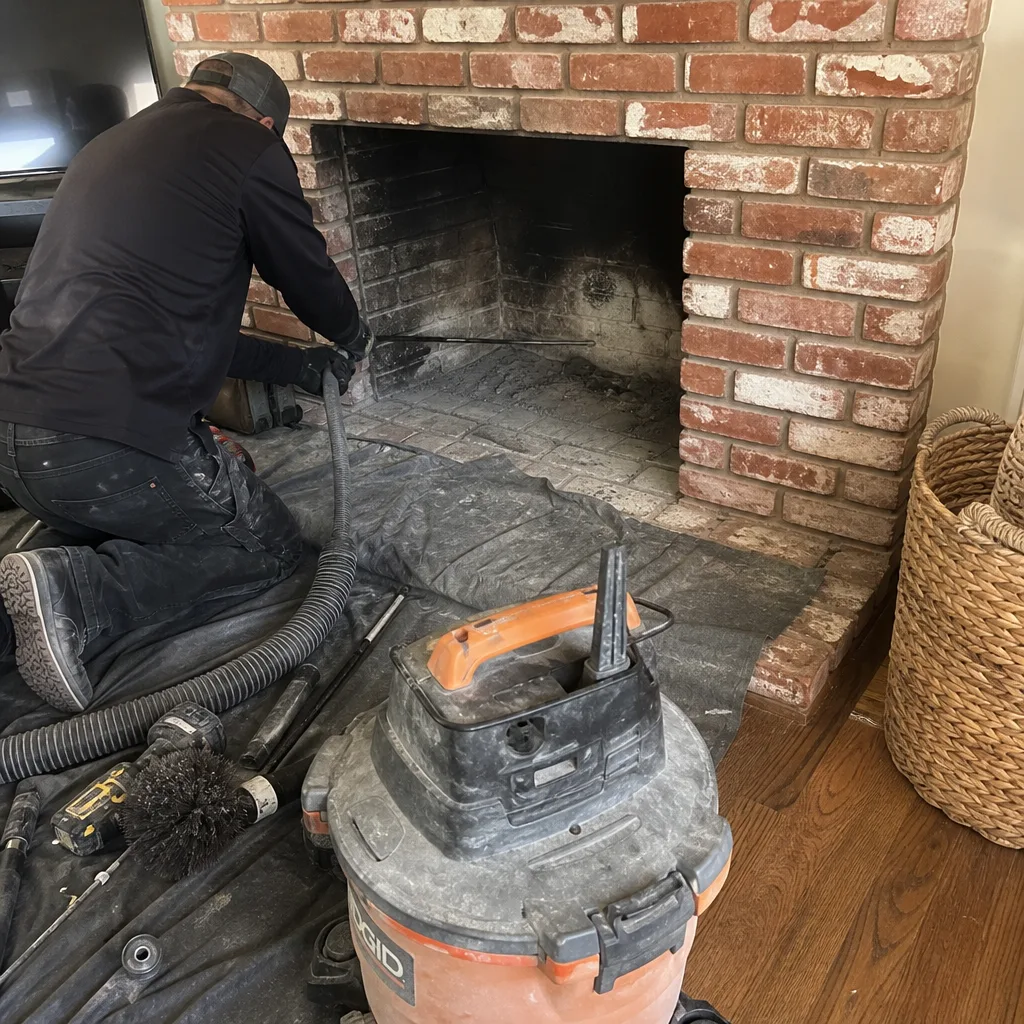 Before
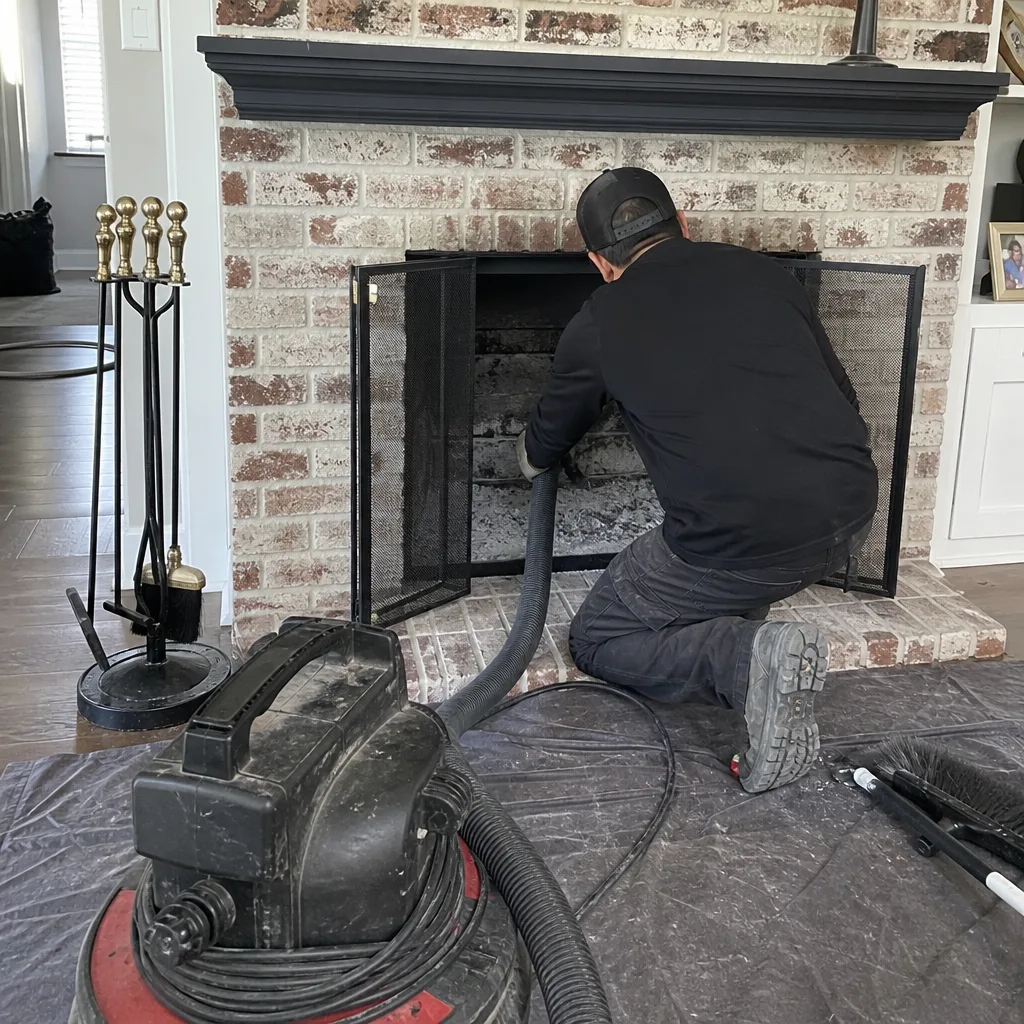 After
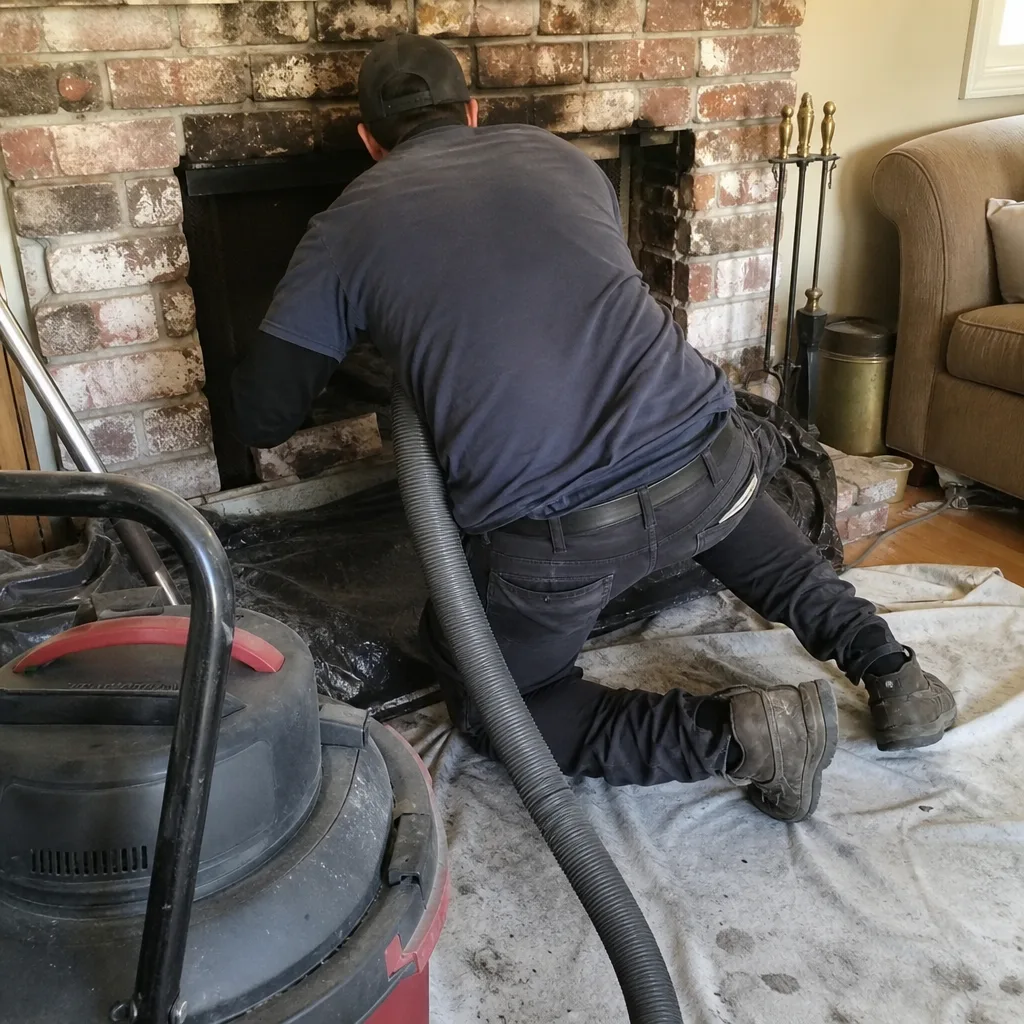 Before
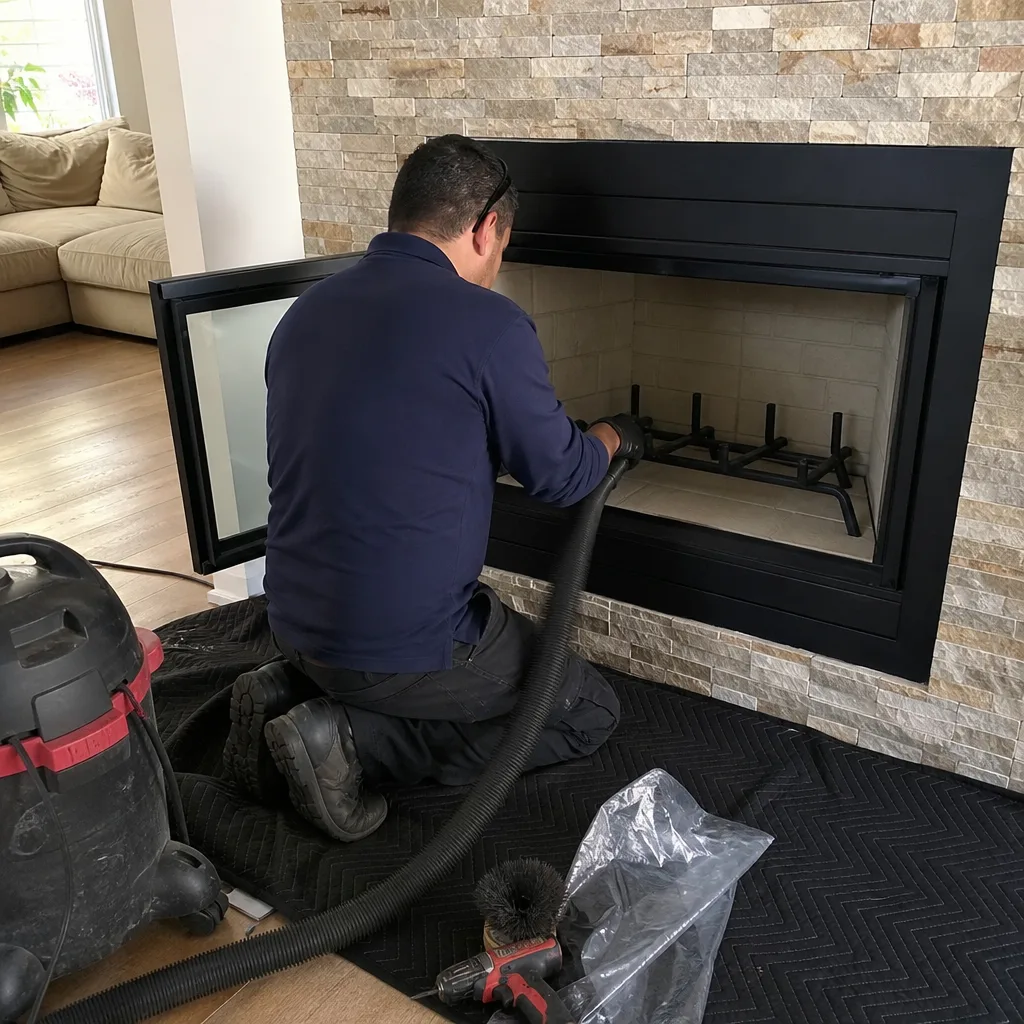 After
When to Call a Professional
You should call a professional when your self-assessment shows anything other than light, flaky Stage 1 creosote on a short, easily accessible flue you can safely reach from a low-pitch roof. You should call when you’ve seen evidence of a chimney fire, when the damper won’t operate, when animals have taken up residence, or when water stains appear near the chimney. You should call when it’s been more than twelve months since the last professional cleaning, because a year in Orange’s humid coastal air is long enough for Stage 2 to form even with moderate use. And you should call if you have a gas insert or a dryer vent that’s part of the same venting system, since both carry their own fire and carbon monoxide risks that are easier to ignore than a fireplace full of soot. Prestige Chimney offers free estimates in Orange. Call (833) 407-0587 to schedule one.
If you’re also noticing longer drying times or a musty smell from your clothes dryer, the Dryer Vent Cleaning in Orange service addresses the same underlying venting hazard from the appliance side. Your dryer vent is a fire hazard hiding in plain sight, and it responds to the same annual-maintenance logic as your chimney.
Frequently Asked Questions
A standard chimney sweep and inspection in Orange typically costs between $180 and $300. The price depends on chimney height, flue type, roof access difficulty, and the level of deposit present. Camera inspection, if recommended, adds $100 to $200. Compare this to the real cost of a safe DIY attempt, which usually lands between $230 and $520 once you factor in the ladder, fall protection, HEPA vacuum, and the brush kit itself. The cost gap narrows dramatically when you account for the fact that the professional service includes the inspection and a condition report. Call (833) 407-0587 for a firm quote specific to your chimney.
You can partially clean the lower flue from inside using a bottom-up brush system, but this method does not properly clean the upper flue where creosote concentrates, and it releases fine creosote dust into your living space unless you have professional-grade negative-pressure equipment. Bottom-up consumer systems are incomplete solutions. The proper way to clean a full flue is top-down with rotary equipment and vacuum containment, which means roof access and professional tools. If your flue shows only light Stage 1 and you have a single-story low-pitch roof, a careful homeowner can do top-down DIY. Anything beyond that profile belongs to a professional.
Creosote continues to accumulate every time you burn, and each burn bakes the existing creosote harder. Stage 2 becomes Stage 3. The flue diameter effectively shrinks, reducing draft and pushing smoke into the home. Most critically, creosote is fuel. A hot ember or a hot burn ignites it, and you have a chimney fire that can reach 2,000°F and crack the liner, spread to the structure, and make your home uninsurable in the aftermath. The cost of annual cleaning is a rounding error next to the cost of a chimney fire. And a chimney fire is not a rare event. It’s the most predictable consequence of deferred maintenance there is.
This is the single most common question homeowners ask after an inspection that reveals liner damage. The honest answer is that liner replacement is genuinely necessary when the existing liner is cracked, separated, or deteriorated to the point that combustion products can reach the home’s structure or the flue cannot contain a chimney fire. That said, not all liner damage requires full replacement. HeatShield restoration can repair cracked clay tile flues with a ceramic sealant applied through the existing flue, saving thousands compared to a full reliner. The key is requesting camera documentation. If a contractor recommends liner work, they should be able to show you the damage on screen from the camera inspection. If they can’t or won’t, get a second opinion. A legitimate recommendation comes with images you can see and understand. For repair work after an inspection, Chimney Repair in Orange should handle both the diagnosis and the fix in one visit, not send you to a second contractor.
Annual service is the correct baseline for Orange homeowners who burn wood at all, even if it’s only 30 to 50 evenings per year. Our burn pattern of short, infrequent fires produces tar-heavy creosote that does not respond well to brushing, and our humid coastal air adds a creosote-friendly seasoning layer during the months the fireplace sits idle. If you burn more than 50 nights per year or you notice performance changes like smoke entering the room or reduced draft, you may need more frequent attention. Wood-burning stoves used as primary heat should be checked mid-season as well. Annual inspection is also the minimum your insurance company’s adjuster will look for if a loss occurs.
No. Chimney cleaning is considered routine maintenance, and routine maintenance is never covered by a standard California homeowners policy. Insurance covers sudden and accidental losses, not upkeep. However, the absence of cleaning records can absolutely affect a later claim. If a chimney fire occurs and the homeowner cannot demonstrate a professional maintenance history, the insurer may deny the fire claim on the grounds of negligence or failure to maintain the property. So while insurance won’t pay for the cleaning, the cleaning receipt is your evidence that the chimney wasn’t neglected. It’s insurance protection at the price of a routine service call.
The Bottom Line
The DIY chimney cleaning decision in Orange isn’t about whether you can climb a ladder or save some money. It’s about what’s actually in your flue. Stage 1 creosote is brushable, and a careful homeowner with safe roof access and the right containment gear can remove it. Stage 2 and Stage 3 are chemical and mechanical problems that consumer kits cannot touch. Most Orange fireplaces have Stage 2 or mixed-stage deposits because short, infrequent burns in humid coastal air create exactly the conditions for tar glaze. Your self-assessment takes five minutes and will tell you which world you’re in. Once you know, the decision makes itself. If it’s Stage 1 and the roof is safe, go ahead. If it’s anything else, call a professional. The phone call is cheaper than the ladder fall, the denied insurance claim, or the chimney fire. Call (833) 407-0587 and we’ll tell you honestly what you’re working with.
Written by the team at Prestige Chimney, serving Orange since 2017. Explore more guides & resources from our team.